

"Nothing can now be believed which is seen in a newspaper. Truth itself becomes suspicious by being put into that polluted vehicle."
— Thomas Jefferson to John Norvell, June 11, 1807
In May 1807, John Norvell, then a teenager, later a United States Senator and co-founder of the Philadelphia Inquirer, wrote to Thomas Jefferson asking how a newspaper should be conducted so as to be most useful. Jefferson's reply is the founding instruction of this work. It teaches three things. First, that the right to tell a story is inseparable from a discipline of truthful telling: the privilege carries an obligation, or the vehicle pollutes the account. Second, that the standing threat is never silence but the vehicle that corrupts the telling. Third, that the protected story is the one a people can confront against its own first-hand knowledge.
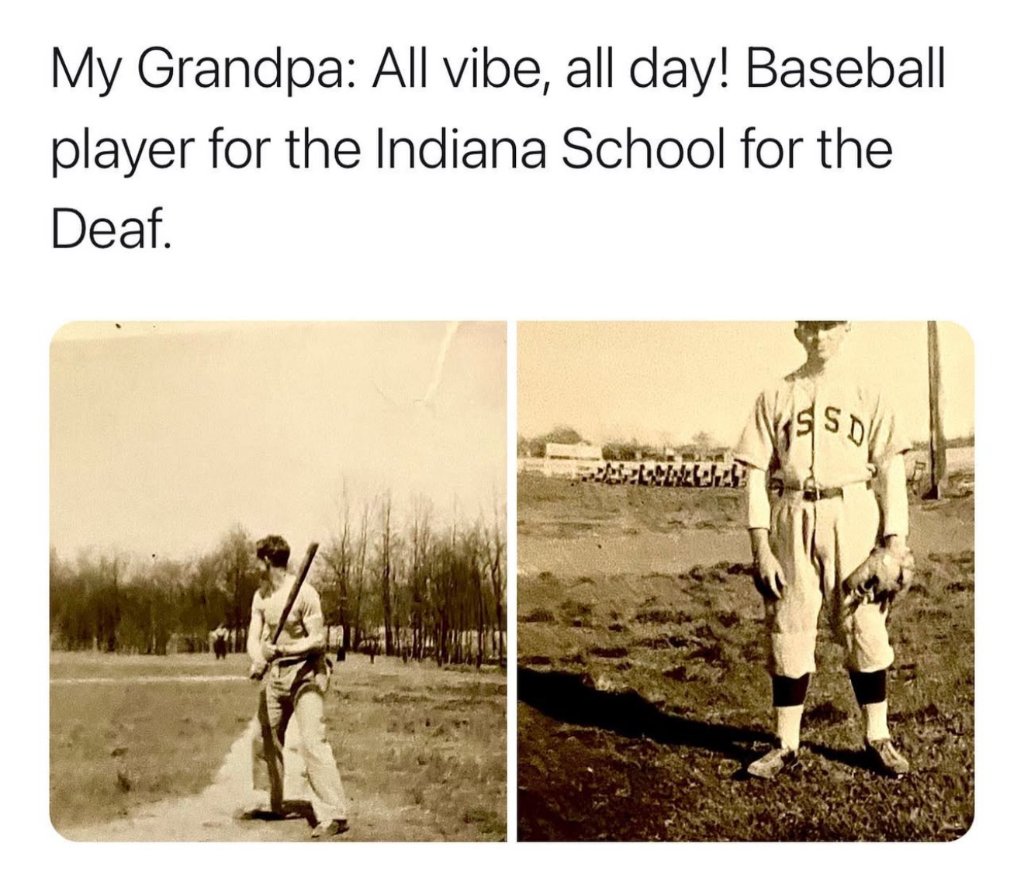
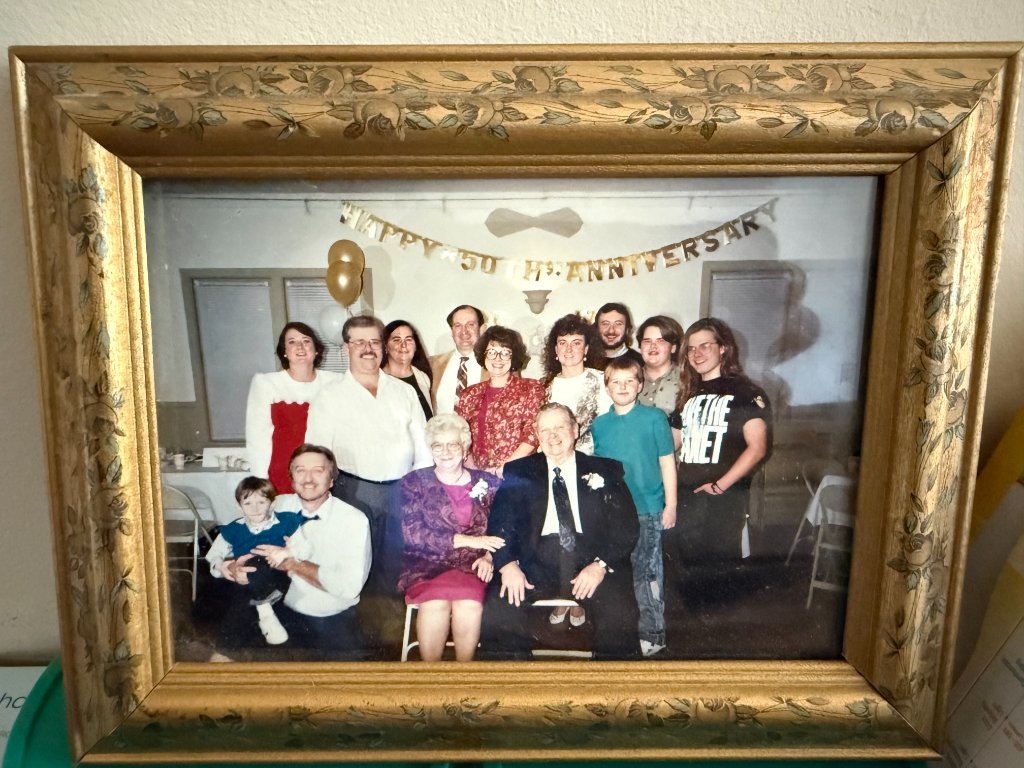
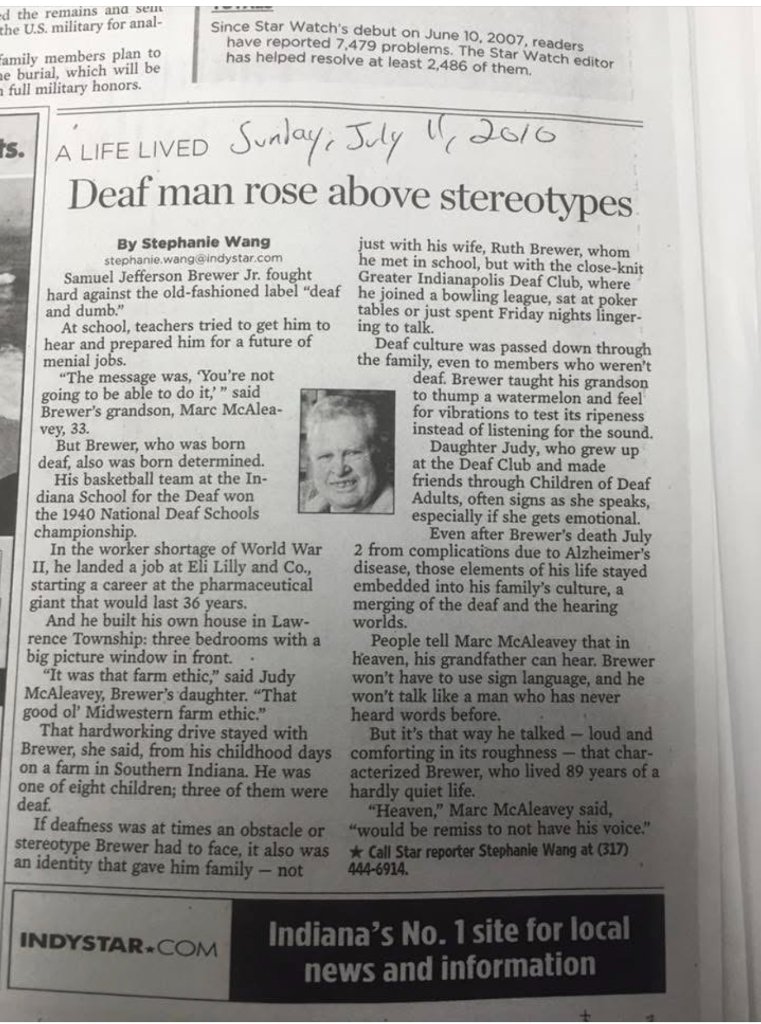
I am writing this as a child of Deaf adults. My grandfather Samuel Jefferson Brewer Jr. was born deaf, fought the label "deaf and dumb," played basketball at the Indiana School for the Deaf, won the 1940 National Deaf Schools championship, and built his own house in Lawrence Township. He taught me to thump a watermelon for vibrations. He lived 89 years of a hardly quiet life. When people told my mother that in heaven he could hear, she said: "Heaven would be remiss not to have his voice."
This review inherits the same standing question Jefferson gave Norvell, how should the public telling be conducted so as to be most useful, and answers it not with a newspaper but with a doctrine and a set of convivial tools. The question that organizes it is whether a person or a people has a right not merely to tell their story but to protect the telling: to keep the account of their own life from being confiscated, audited, re-narrated, or compelled by the institutions that increasingly hold the clipboard.
The figure that organizes this inquiry is a triad, the right to tell (First Amendment), the right to protect the telling (the "Second," recovered past the gun, as a metaphor of defense), and the right to withhold it (Fifth Amendment), examined not doctrinally but as the structure of a single underlying claim. The wrong under investigation is the institutional confiscation of authorship: the efficiency-audit that redefines a community as deficit, the philanthropic metric that scores a neighborhood, the professional helper who narrates a people in terms it did not choose.
Architecture of the Argument
"Is there a foundational right to protect one's story?"
Yes, foundational in Arendt's precise sense: a precondition for bearing rights at all.
Anchors: Arendt · Said · Bhabha · Coulthard · Spivak
"What is the logical structure of the right?"
A Hohfeldian bundle: privilege to tell + immunity against compelled disclosure + immunity against terminal confiscation.
Anchors: Hohfeld · Nedelsky · Cover · Raz · Hart
"What is the harm when it is violated?"
A domination (breach of immunity) → epistemic injuries → damaged identity → Arendtian loss of standing. It carries a material face.
Anchors: Fricker · Dotson · Spivak · Nelson · Pettit
"How is the right protected, and how is a damaged story repaired?"
Protection: institutionalize the immunity (CARE Principles, Indigenous evaluation). Repair: counterstory, taken rather than received, coupled to material restitution.
Anchors: Delgado · Nelson · CARE · LaFrance & Nichols · Coulthard
RQ1, Is there a foundational right to protect one's own story?
The claim rests on what a story is to a self. The narrative-identity tradition holds that selfhood and peoplehood are not merely described by narrative but constituted by it. If these accounts are right, a right concerning one's story is not a right over a possession one happens to hold. It is a right over the self, because on this view there is no self prior to and independent of its account.
Arendt (1951) supplies the deepest argument. She observed that the refugees' most fundamental deprivation was not the loss of any particular right but the prior loss of membership in a community that would register their account of themselves as one that counts. This is her famous "right to have rights": the precondition, anterior to any specific entitlement, of being the kind of being whose claims can be heard at all. The right to protect one's story is a strong candidate for that precondition. To lack standing to author one's own account is to be politically null.
Said (1984) showed that the standing to narrate is unequally distributed, that one party may be granted authority to tell the story of a conflict while the other is "denied permission to narrate." Bhabha (1990) developed the "right to narrate" as the ground from which a people composes itself into political existence. Coulthard (2014) closes off the wrong remedy: recognition sought from the dominant power reproduces the subordination it was meant to remedy. The right to protect one's story cannot be a right granted by the institution that confiscates it. It must instead be built from below.
The community that registers one's account as significant need not be the nation-state. It can be the association, the hall, the collective. The right is secured horizontally, by the standing that communities author for one another.

Three bounds hold the right in shape: non-domination (it reaches only to the edge where it would foreclose another's authorship), materiality (it is not severable from control over the means of life), and truth-discipline (the right protects the standing to compose a truthful account, not a license for any self-flattering fiction). Without these bounds the right would prove too much. With them it states a defensible and limited foundation.
Tell · Protect · Withhold
Three constitutional anchors of one foundational right, mapped onto Hohfeld's jural grammar
The Right to Tell
The freedom to compose and utter one's own account. Protected against state abridgment. The speaker holds a no-duty-of-silence.
Meiklejohn · Baker · Scanlon · Shiffrin
The Right to Protect
Others lack the power to overwrite, re-author, confiscate, or audit away the account. The institution bears a disability.
Hohfeld · Nedelsky · Cover · CARE Principles
The Right to Withhold
No person may be compelled to author the account that condemns them. Glissant's right to opacity, in positive law.
Levy · Glissant · Dotson (smothering)
RQ2, What is the logical structure of the right?
Hohfeld (1913) showed that the loose word "right" conceals four distinct jural relations. The central structural claim of this study: the right to tell one's story is, at its floor, a privilege, the subject is under no duty of silence. But a bare privilege to tell is a naked liberty. The state need not silence you, yet nothing in the privilege itself disables it from doing so. The missing shield is an immunity: a disability on the state, which lacks the power to abridge the telling.
The right to protect the telling, the "Second" recovered as figure, and the Fifth's withholding, is an immunity outright. The state and the institution lack the power to overwrite, re-author, confiscate, or compel disclosure of the subject's account; correlatively they bear a disability. This is the exact jural form of the sentence the broadside could only gesture at: they cannot audit your authorship away.
The Fifth Amendment's "privilege against self-incrimination" is, in strict Hohfeldian terms, not a privilege at all but an immunity: the individual is simply not subject to a state power to compel self-incriminating narration. Named correctly, the negative pole of the right to protect one's story turns out to be, already and in constitutional law, an immunity of exactly the kind the thesis requires.
The intellectual honesty requires marking the load-bearing risk plainly: Hohfeld never applied his apparatus to narrative or expression, and there is no secondary literature that does so in these terms. The application is this study's construction, warranted not by borrowed authority but by the precision it delivers.
RQ3, What is the harm when the right is violated?
The violation is not a vague silencing. It is a specifiable wrong: an institution exercising a power over authorship from which it ought to be disabled. Fricker (2007) gives the injury its sharpest name: testimonial injustice (the speaker is wronged specifically in their capacity as a giver of knowledge) and hermeneutical injustice (the tools to author the account have been withheld or never made). Dotson (2011) adds testimonial smothering, the speaker truncates their own testimony, anticipating that it will not be safely received.
A flattering audit, one that re-narrates a community accurately, even generously, is still a breach, because the harm is the seizure of authorship, not the quality of the resulting story. "But our metrics were fair, our intentions good" is no defense, since the injury was done in the taking, not in the telling.

When the Right Is Violated
Each breach widens the channel for the next. The cascade is self-deepening.
The Jural Breach
An institution exercises a power over authorship from which it ought to be disabled. The wrong is complete in the exercise, not in the outcome.
The Epistemic Injuries
Testimonial deflation · Hermeneutical foreclosure · Coerced smothering · Epistemic violence. Wounds to the subject as author and knower.
The Damaged Identity
Sustained over time, the imposed account is internalized. The subject begins to hold the confiscator's story as their own. (Nelson, 2001)
The Arendtian Loss
At the limit: the loss of standing as a being whose account counts at all. The wound that makes all other wounds possible.
The harm is never only epistemic. The audit that re-authors a community as "deficient" is, in the same act, the instrument that redirects the resources. The confiscated story licenses the material dispossession.
The harm is layered, and the layers compound. At the first level it is jural: a breach of immunity, a domination. At the second it is epistemic: testimonial deflation, hermeneutical foreclosure, coerced smothering. At the third it is ontological: sustained over time, the imposed account is internalized as what Nelson (2001) calls a damaged identity. At the limit it reaches the Arendtian harm RQ1 began with, the loss of standing as a being whose account counts at all. The cascade is self-deepening, which is its cruelest feature: each confiscation makes the next easier.
RQ4, How is the right protected, and how is a damaged story repaired?
Two operations are needed, and they are not the same. Protection is prospective, it forecloses the harm by securing the immunity before it can be breached. Repair is retrospective, it restores authorship after a breach has done its damage. A single criterion governs both: does the instrument, the practice, the remedy steward authorship toward the community, or capture it?
The repair literature centers on the counterstory. Delgado (1989) argued that the narratives of out-groups function as a corrective to the majoritarian "stock story." Nelson (2001) supplies the keystone concept, narrative repair: the work by which counterstories resist the oppressive master narrative and restore an identity it had damaged. Tuck (2009) marks the sharpest limit: even well-meaning repair can re-inscribe the wound when it is damage-centered, when the community is invited to author itself only through its brokenness.
Protection moves the immunity from a moral claim into a standing structure. The CARE Principles (Carroll et al., 2020) are the clearest instance: Collective benefit, Authority to control, Responsibility, Ethics. "Authority to control" is the immunity of RQ2 written into governance, the community's power over its own account made institutional rather than merely asserted. Coulthard's recognition trap returns as a constraint: repair sought as recognition from above is not repair. It follows that the apparatus of professionalized "narrative healing", the trauma-storytelling commissioned and curated by an institution, must be put to the framework's own test.
Custodial vs. Terminal Narration
Every instrument, evaluation, index, report, can be put to this test. Including the author's own.

Narrative repair is necessary and not sufficient. Repair must be coupled to material restitution: the return of control over the means as well as the account. The handoff must actually occur rather than being deferred indefinitely by the satisfactions of having spoken.
Hohfeld gives the static relation, privilege, immunity, the disability others bear. He does not give a threshold: a doctrine of when a larger power may legitimately reach into a smaller domain at all. The American constitutional order has worked that exact problem for two centuries under the heading of federalism, and its architecture, borrowed as analogy and not as doctrine, supplies the jurisdictional companion to the relational structure.
The most useful borrowing is not from the Second Amendment but from the commerce clause. United States v. Lopez (1995) is a federalism case: the Court struck the statute because the chain of inference had no limiting principle. The structure transfers directly to narrative jurisdiction. An institution that would re-author a community's account must show a substantial and demonstrable necessity, not a vague appeal to transparency, efficiency, or the public good. This is what stops the audit from being the answer to everything.
The anti-commandeering doctrine, New York v. United States (1992), Printz v. United States (1997), holds that the larger sovereign may not conscript the smaller polity's own machinery to carry out its aims. Translated to authorship: the macro institution may not commandeer a community's own measurement and narration apparatus to produce the institution's account of it. An audit that forces a neighborhood to adopt the funder's metrics, definitions, and reporting categories as the price of a grant has commandeered the community's apparatus.
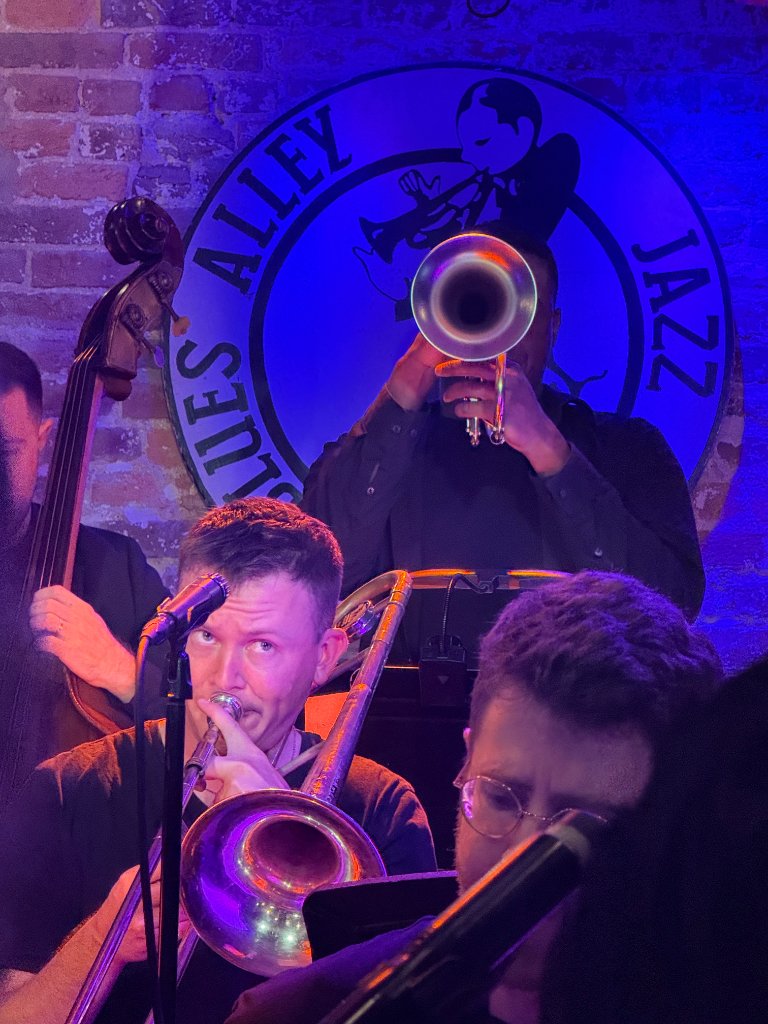
Blues Alley Jazz, Washington D.C. Music is the hall that owns its account, every night, the community re-authors itself in front of a room full of witnesses.
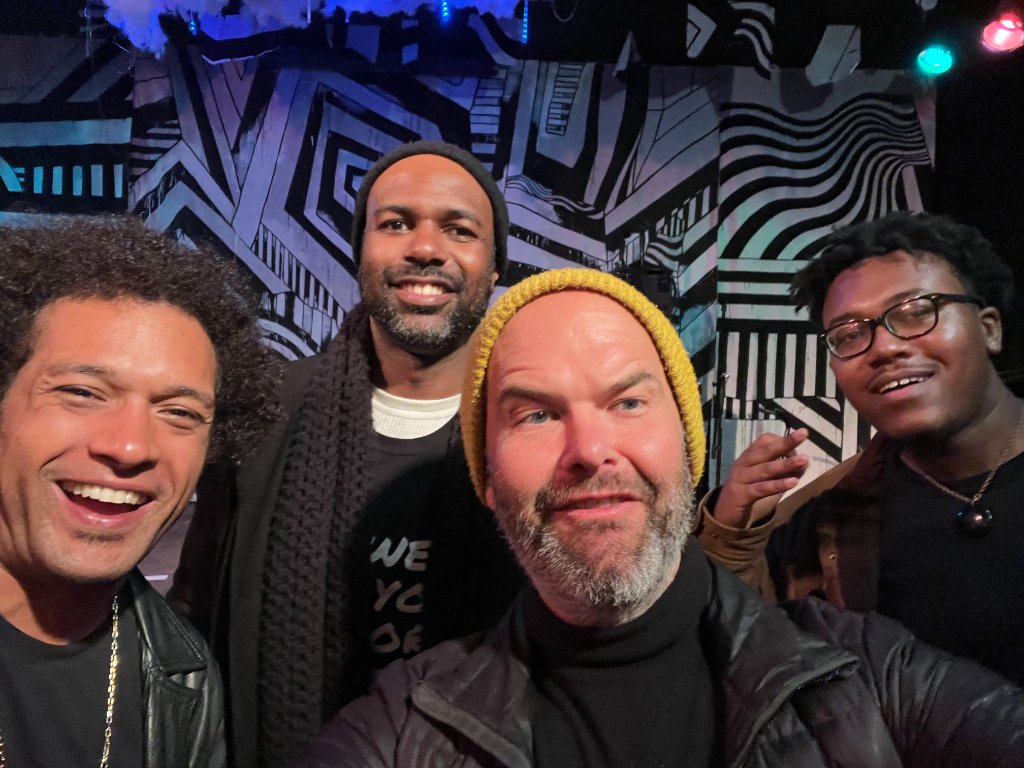
Community is built person to person, room to room. Rights enforced horizontally, not petitioned from above.
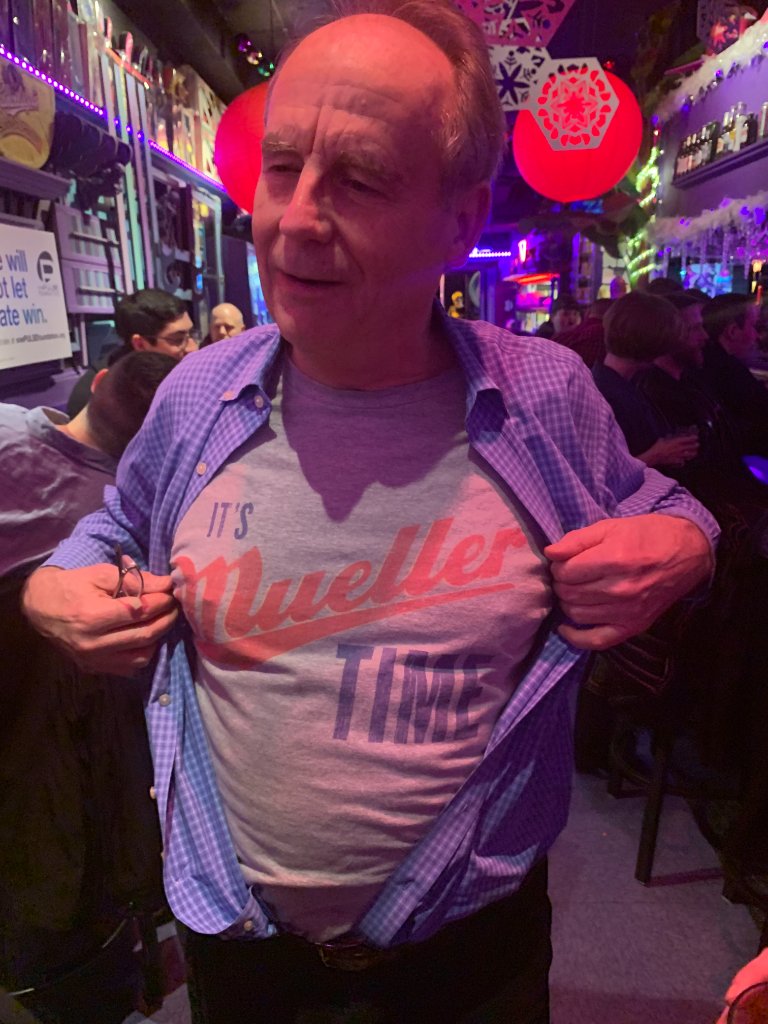
"It's Mueller Time." The civic body retaining the right to narrate power, with joy and irreverence intact. Jefferson would approve.
The four questions close into a single argument. There is a foundational right to protect one's story, foundational in Arendt's precise sense of a precondition for being a bearer of rights at all. It has a definite jural structure: a privilege to tell, shielded by an immunity to withhold and to remain unconfiscated. Its violation is a specifiable domination that cascades from breach to epistemic injury to the erosion of standing, and that carries a material face. It is answered by two operations governed by one criterion, protection, which institutionalizes the immunity, and repair, which restores custodial authorship.
The through-line, and the measure the whole apparatus rests on, is authorship: not as the terminal value, but as the penultimate one whose stewardship, convivial rather than confiscating, is the test of every institution that would tell a people's story back to them.
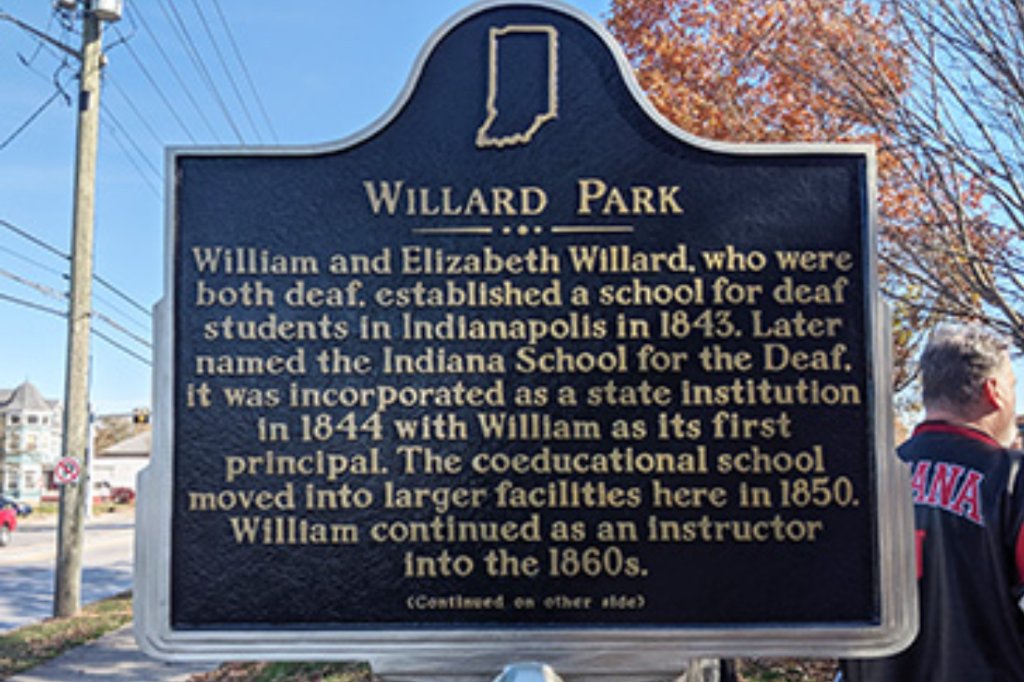
My grandfather taught me to thump a watermelon. He found out whether it was ripe by the vibration, by the way it sent what it knew back through his hands without any hearing required. That is not a compensation for deafness. That is an epistemology. The Indiana School for the Deaf built an institution that made that epistemology thinkable as a curriculum. William and Elizabeth Willard built it because they were Deaf and knew what Deaf children needed, and they built it before the state asked them to. When the state later cut the funding, it was not correcting a deficit. It was confiscating an inheritance.
The First Amendment secured the right to tell. What remains to be secured is the right to protect the telling: to keep the pen in the hand that lives the life. A people that holds it can be wronged, and can be repaired. A people that has lost it can only be described.
The Measure
The measure of every institution that approaches such a people is, in the end, simple, and it is the measure this review has worked to make precise. It is whether the institution tells their story back to them, or returns the pen.
Complete Scholarly Edition Available
The full scholarly apparatus — five appendices, the complete annotated bibliography of 160 sources across thirteen clusters, the univocity test, debate map, steelman critique, and disconfirming literature — is available in the complete edition.
Open the Complete Scholarly Edition →