Emotional intelligence, when it is handed uninformed to neurodivergent people, is a cochlear implant for the feelings. I do not mean that as a flourish. I mean it as a structure, the same structure, performed on a different organ.
The cochlear implant has been argued over inside Deaf community for two generations, and the argument was never really about hearing. It was about who holds the pen on a Deaf life. When the implant is placed in a child too young to consent, it carries out a sequence of moves so familiar that the sequence deserves a name, because once you have learned to see it in the ear you cannot stop seeing it everywhere the helping professions go to work.
The Four Moves · Implant and Instrument Alike
Rename the difference a deficit.
What was a way of being becomes a lack, a low score, a thing the person is missing.
Relocate the lack into the body.
The problem is filed inside the person and never inside the room that was built for someone else.
Remediate toward a borrowed norm.
The fix is rehearsal, the long labor of becoming fluent in a grammar you did not write.
Foreclose before consent.
The trade is made early, on a child, before anyone asks whether the child wanted it.
Every one of those moves is a confiscation of authorship.
Every one of those moves is a confiscation of authorship, and the emotional curriculum we now hand to neurodivergent children makes all four under a banner so gentle that no one thinks to resist it. A different way of attending and feeling and relating arrives at school and is met with a checklist. Make eye contact. Read the room. Name the feeling on the chart. The difference is scored as low empathy or poor social skills, the deficiency is written into the child rather than into the building drawn for another nervous system, and the remedy is the quiet, exhausting work of masking, of performing a grammar of feeling that someone else composed, until the child is fluent in everyone's interior except their own. By the time anyone thinks to ask whether they agreed to the trade, the trade is already decades old.
The tell is the word INTELLIGENCE. Intelligence smuggles in a single scale, more of it or less of it, and a single scale is the most powerful instrument of narration we own, because it turns a way of being into a quantity you are told you are short of. It is the audiogram doing to the heart what it did to the ear, taking a whole manner of moving through the world and printing it as a number that slopes downward away from normal.
A measure that pretends a mutual mismatch is a private deficiency is not a measure. It is a verdict wearing the costume of a number.
And the part the scale is built to hide is that the failure runs in both directions. What researchers have begun to call the double empathy problem is the plain finding that the neurotypical person reads the autistic one no better than the reverse, that the gap between them is mutual, a meeting of two grammars rather than a flaw in one. Yet the bill for the gap is only ever handed to a single side, and it is always the side with the least power to refuse it. We have built an entire profession on the premise that one party to a misunderstanding is the misunderstanding.
Deaf studies kept a word for what the implant forecloses. They call it DEAF GAIN, the insistence that a Deaf way of being is not a subtraction from a hearing life but a widening of the human range, a set of gifts the rest of us would be poorer without. The neurodivergent child carries a gain of their own that no emotional curriculum is built to count, the attention that does not skid across the surface of things, the loyalty to what is true over what is smooth, the refusal to perform a warmth that is not felt. We do not measure any of that. We measure only their distance from us, and then we call the distance their problem.
Hold the structure still for one more turn, because the instrument does the same thing along every axis of difference it meets, and the place it has been documented most plainly, and most lethally, is race. Ask the question the scale never asks of itself. Whose manner of feeling became emotional intelligence? The dominant one. So the same measure that scores the autistic child scores the Black employee whose directness is filed as aggression, the Black patient whose advocacy is filed as noncompliance, the Black student whose anger at a system steeped in contempt is filed as a failure to control herself and is met with the discipline that removes her from the room.
The double empathy problem, the mutual gap that only one side is ever billed for, is the same gap here, except the side handed the bill is the side this country has been handing the bill to since before it had a name for the practice.
This is how a hierarchy that can no longer say its own name stays in force. It no longer needs animus. It needs only an instrument, a measure that calls the dominant way of being intelligence, or professionalism, or culture fit, or self control, and then applies it as though it were a neutral fact about a person rather than a preference of the people who wrote it. The prejudice becomes a score. The score becomes a record. Ruha Benjamin gave the larger pattern its name, the New Jim Code, discrimination rebuilt inside tools that present themselves as objective, and the emotional curriculum is one of its softest and most trusted instances, because no one thinks to search a hug.
Structural racism no longer needs to hate you. It needs only to measure you, and to call the measurement help.
You can trace the whole arc in a single line, from Yale to your doctor's office. The instrument is authored and credentialed in the academy, and the leading scientific home of emotional intelligence sits, fittingly, at Yale. It is carried out at the point of care, in the room where a clinician's fast read of a patient's affect and credibility decides whether her pain is believed. Black patients' reports of pain are discounted at rates that track old and false beliefs about the body, and the discounting follows them from the emergency room to the delivery ward, where the dismissal of a Black woman's account of her own symptoms is not a figure of speech about lost authorship but a leading cause of her death.
The sharpest form of this charge has come from inside the house. Dena Simmons, who served as an assistant director of the very Yale center where emotional intelligence is studied as a science, warned that social and emotional learning taught without a reckoning with race becomes "white supremacy with a hug" — a curriculum that asks Black children to regulate themselves into the comfort of a system that was never going to regulate itself for them. That is the confiscation in its purest form, the demand that the wronged party manage their own feeling about the wrong, on a chart, for a grade, while the wrong itself goes unmeasured and unnamed.
Everything set down so far — the ear and the heart and the gurney — rests on a single buried sentence. The First Amendment protects the right to tell our story and we have rehearsed that right until it feels like the whole of the matter, when the telling was never the part most easily taken. What we have never named, and what the audit and the metric and the helping profession quietly confiscate, is the right that stands behind the telling and guards it, the standing to keep the account of your own life from being scored, overwritten, or narrated back to you by whoever holds the clipboard.
There is a second right, then, the one the First Amendment assumes and does not protect. A permission that cannot be defended is not yet a right at all, only a courtesy, and a courtesy can be withdrawn by whoever extended it.
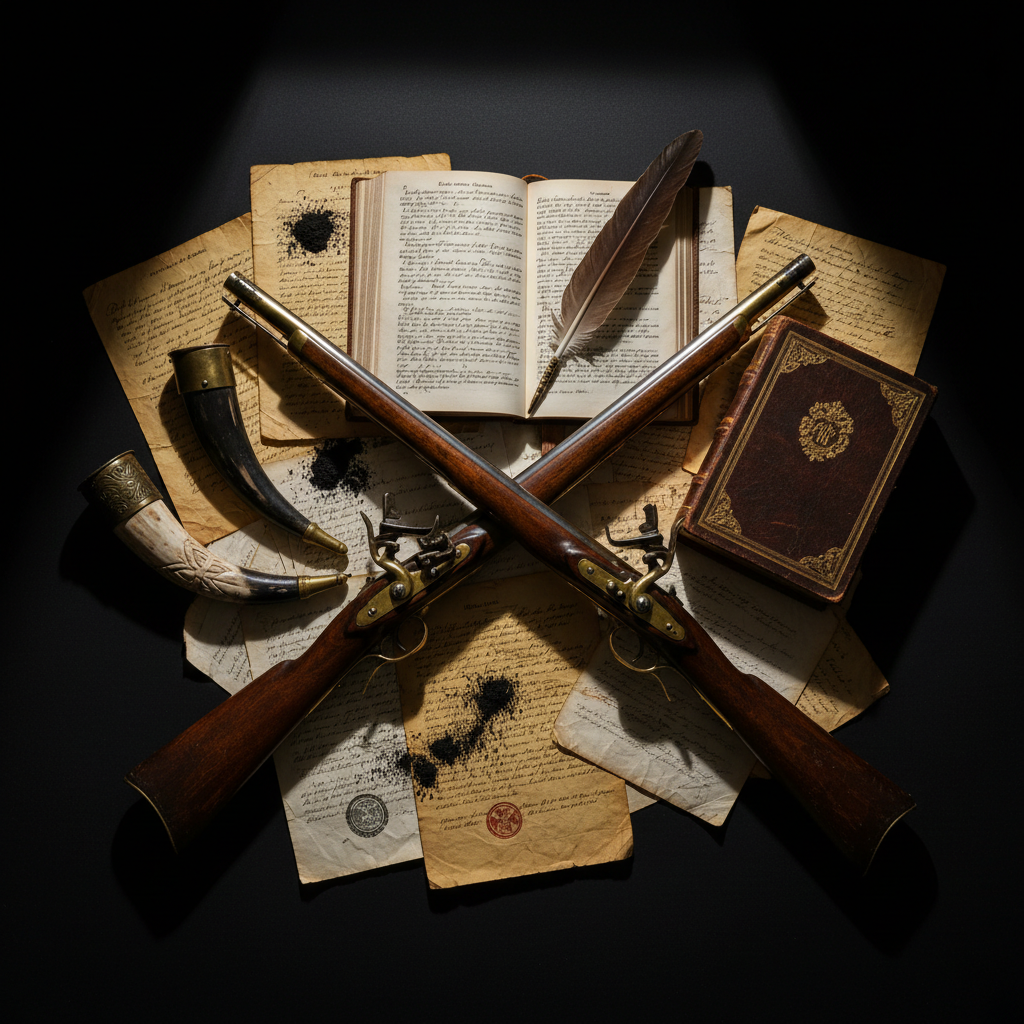
I am going to reach for the Second Amendment to name that right, and I want to be exact about how, because I am not making a claim about muskets and I am not telling you what the courts decided when they read it as a private arsenal. I am recovering the older civic meaning the gun later swallowed — the meaning the historians of the founding keep trying to hand back to us, that the Amendment was never first about the weapon and was always about the readiness, the standing of a free people to back its own account and refuse to be reduced.
Walk into the convention in Philadelphia in the summer of 1787 and into the ratifying convention in Richmond the following June, and understand that the men in those rooms were not theorizing an abstract liberty, they were protecting a particular story, their own, the story of land held and worked and passed down a family line, a story with a fault laid into its foundation, because the labor the land depended on could walk away or it could rise up, and either one unwrote the story at the root.
Two family stories met in that room, and the Constitution decided which one it would arm.
When the labor walked away they answered with the clause we have learned to call the fugitive slave clause, brought late in the convention by two South Carolinians and agreed to with almost no argument. They would not write the word slave — they wrote a person held to service or labor, and they struck the word legally from an earlier draft so the document would not seem to grant that there could be property in a man. In one motion they confiscated the escape and erased the name of what they were confiscating, which is the cleanest form the protection of a story has ever taken.
When the labor threatened to rise they answered with the militia, and that fear was spoken aloud on the Richmond floor, where the greatest orator of the age counted the enslaved of Virginia by the hundred thousand and warned that if those people rose a state acting alone could not lawfully put them down. The militia he was so desperate to keep in Virginia's hands was the slave patrol, the same body riding under another name, and the Second Amendment that Madison wrote to carry the state was in part a promise to the slaveholders that the instrument which guarded their land would never be lifted from the hands that needed it to guard their story.
The people held under that patrol carried a story of their own, kinship and lineage and children and the memory of where they came from, and that story was the exact thing being confiscated, sold south, stripped of a surname, denied the standing to be told at all. They seized the right anyway, by every other means a disarmed people invents — in the spiritual that said more than the master was meant to hear, in the testimony no court would admit and the history no school would teach, in Douglass who understood that a people's rights are never more secure than their power to defend them. That improvisation is the truest form the second right has ever taken, the right to protect the telling exercised by exactly the people the founding worked hardest to leave storyless.
Domination in our century does not arrive as a chain or a patrol. It arrives as a score, and the right that answers it is not the right to speak louder but the right to refuse the scoring, to read the measure taken of you and to say that it is not the account of your life and that you will not sign it.
Set that beside everything this dispatch has named and the four moves resolve into a single confiscation, because the audiogram that prints a way of hearing as a number sloping away from normal, the empathy curriculum that scores a child's warmth against a grammar someone else composed, and the fast clinical read that weighs a Black woman's testimony of her own pain and finds it wanting are the same act the convention performed — the taking of a life's account and the handing of it back as a deficiency the person is now expected to manage and to thank you for.
There is a way to tell whether an instrument protects a story or steals it, and it has nothing to do with whether the people who built it meant well. Ask who authored the measure. Ask toward whose norm it points. Ask whether the person being measured is allowed to read it and to refuse it. Ask who owns what it produces. By every one of those lines the emotional curriculum, as it reaches the neurodivergent child, comes back the same way the audit always does, and the same way the convention did. It is a confiscation with a kind face.
Keep the pen in the hand that lives the life.
So the question was never whether a person should come to understand their own feelings. Of course they should. The question is who gets to author the account of them. And the measure of any institution that comes toward a people — a school, a clinic, a funder, a friend — stays simple all the way down. It is whether the institution tells their story back to them, or whether it returns the pen.
This dispatch draws on a longer work in progress, The Right to Protect Our Story, which asks whether there is a foundational right to author the account of one's own life, what its structure is, what the harm is when it is broken, and how it is protected and repaired.