

At the end of every semester, Dr. Patrick McGeever climbed up on the desk at the front of his Y103 classroom at IUPUI. Y103 was Introduction to American Politics. Pat taught it with Howard Zinn's A People's History of the United States as a primary text. Zinn tells American history from the side of workers, women, and the poor. That was Pat. He stood up there over a room full of students and unbuttoned his dress shirt. Underneath was a T-shirt that said "Introduction to American Politics Y103" across the front. Then he turned around. He told us this was the one thing he wanted us to take away from the semester. The back of the shirt said "Question Authority."
Pat did it every semester. I saw it more times than anyone in those classes because I was his TA for most of my years as an undergrad, a philosophy major teaching political science. That lesson became my career. It is the reason I write what I write. Some people in my own community think I am disordered for writing it. Indiana University trained me to write it.
I have been cancelled for asking questions. Based on firsthand evidence and verified information, I found out that a former supervisor at Indiana University was saying things about my character. I sent that supervisor a cease and desist letter. Questioning has cost me work, a home, and colleagues. I have been unemployed. I have been homeless. Very public community leaders close to the president of Indiana University no longer answer my emails. Some people in my community now treat my writing as a symptom. When people turn a disagreement into a diagnosis, they never have to answer the argument.
Indiana University taught me to question authority. In this essay, the authority I am questioning is Indiana University. The question is who gets to teach us what is good.
In June 2025, Indiana University cut my degree. A new state law set a floor of 15 graduates a year for a bachelor's degree, averaged over three years. Before the law took effect, IU went through its own programs. It suspended the bachelor's and master's degrees in philosophy at IU Indianapolis on its own, as a routine staff action (Commission for Higher Education, June 2025). The bachelor's averaged 6.33 graduates a year from 2022 to 2024. That is 19 graduates in three years. IU suspended the two degrees in Labor Studies, part of the School of Social Work, at the same time. IU did not suspend the bachelor's degree in philanthropic leadership. It averaged 6.67 graduates a year. That is 20 graduates in three years. IU asked the state to keep it open with an improvement plan, and in April 2026 the Commission agreed. It was one of eleven programs at IU Indianapolis given that chance (Commission for Higher Education, April 2026). Philosophy and philanthropy were one graduate apart over three years. IU kept philanthropy and cut philosophy. The philanthropy school had also just opened a new doctorate in philanthropic leadership in 2023 (Inside Indiana Business). IU has not published its reasons for treating the two bachelor's degrees differently, and the improvement plan it filed is not public.
Philosophy is the home of ethics. It is where students read Aristotle on virtue and Kant on duty. It is where they argue about what a good life and a just society require. IU also teaches ethics at the Lilly Family School of Philanthropy. Its bulletin lists Ethics and Values in Philanthropy, Applying Ethics in Philanthropy, and a doctoral seminar on the Ethical, Moral, and Religious Aspects of Philanthropy (IU Indianapolis Bulletin). A foundation paid to build that school. We need ethics more than ever.
The philanthropy school has had a public voice on civility. In 2023, Alexandra Hudson was an adjunct professor at the Lilly Family School of Philanthropy and the founder of Civic Renaissance (Federalist Society). That year she published The Soul of Civility, a book on how we should treat one another (Next Big Idea Club). Pat McGeever taught me a different lesson, standing on a desk. He taught me to question authority. Indiana University kept the school that teaches civility. It suspended the degrees that taught us to question.
Part IThe First Schools of Philanthropy Trained Social Workers
In the summer of 1898, the Charity Organization Society of New York opened a six-week course for people who worked with the city's poor. It met at 105 East 22nd Street. It was called the Summer School in Philanthropic Work. By 1904 the course had become a full year of study with a new name, the New York School of Philanthropy. Edward T. Devine was its director (Columbia). Devine and the Society were busy outside the classroom too. In 1898 the Society formed a Tenement House Committee. Its work led to a new state tenement law and a city Tenement House Department in 1901 (Columbia University Libraries). In 1904 Devine helped found the National Child Labor Committee and the National Association for the Study and Prevention of Tuberculosis (Social Welfare History Project).
For Devine and the Society, philanthropy was the study of bad housing, sick lungs, and children in factories. The school trained the people who went into those homes. Then those same people went to the statehouse to change the law.
The Society had its own record to answer for. Josephine Shaw Lowell and other founders started it in 1882 to bring order to the city's charity. Its friendly visitors investigated families to decide who deserved help, and its case files were sometimes used to cut aid off (Sribnick, ICPH). The school still sent its students to the statehouse.
Chicago did the same thing a few years later. Graham Taylor ran the Chicago Commons settlement house. In 1903 his training program, working with the University of Chicago, took the name Social Science Center for Practical Training in Philanthropy and Social Work. In 1908 it opened as the Chicago School of Civics and Philanthropy. Sophonisba Breckinridge, Edith Abbott, and Julia Lathrop taught and led there. All three had lived and worked at Hull House. Their students investigated juvenile delinquency, truancy, and housing in a city that was growing faster than anyone could house it (Crown Family School, UChicago Library). The University of Chicago had its own unit for this work. It was called the Philanthropic Division.
Then the schools took "philanthropy" out of their names. In 1919 the New York School of Philanthropy became the New York School of Social Work. In 1920 the Chicago School of Civics and Philanthropy merged with the University of Chicago's Philanthropic Division. The new unit was named the School of Social Service Administration (Columbia, UChicago Library). The records I have read do not explain the new names. They show that the people doing the work named their schools after the work itself, social work and social service.
Indiana started training social workers in the same years. In 1911 Indiana University opened a Social Service Department in Indianapolis. It sat inside the School of Medicine, and Dr. Edna G. Henry was its director. In 1915 the university called this a new duty, to help ordinary people with the problems of their daily lives (Busch et al. 2001). By 1944 students could study community organization alongside casework. By 1982 the school's dean was building a statewide coalition to lobby the Indiana General Assembly. IU used the language of service from the start. Its social workers carried that service all the way to the capitol.
For the next six decades, American universities trained social workers under the new names.
Part IIA Funder Built the Second One
Sixty-seven years later, Indiana University put "philanthropy" back into the name of a university program in Indianapolis. The people who built that program were fundraisers and funders.
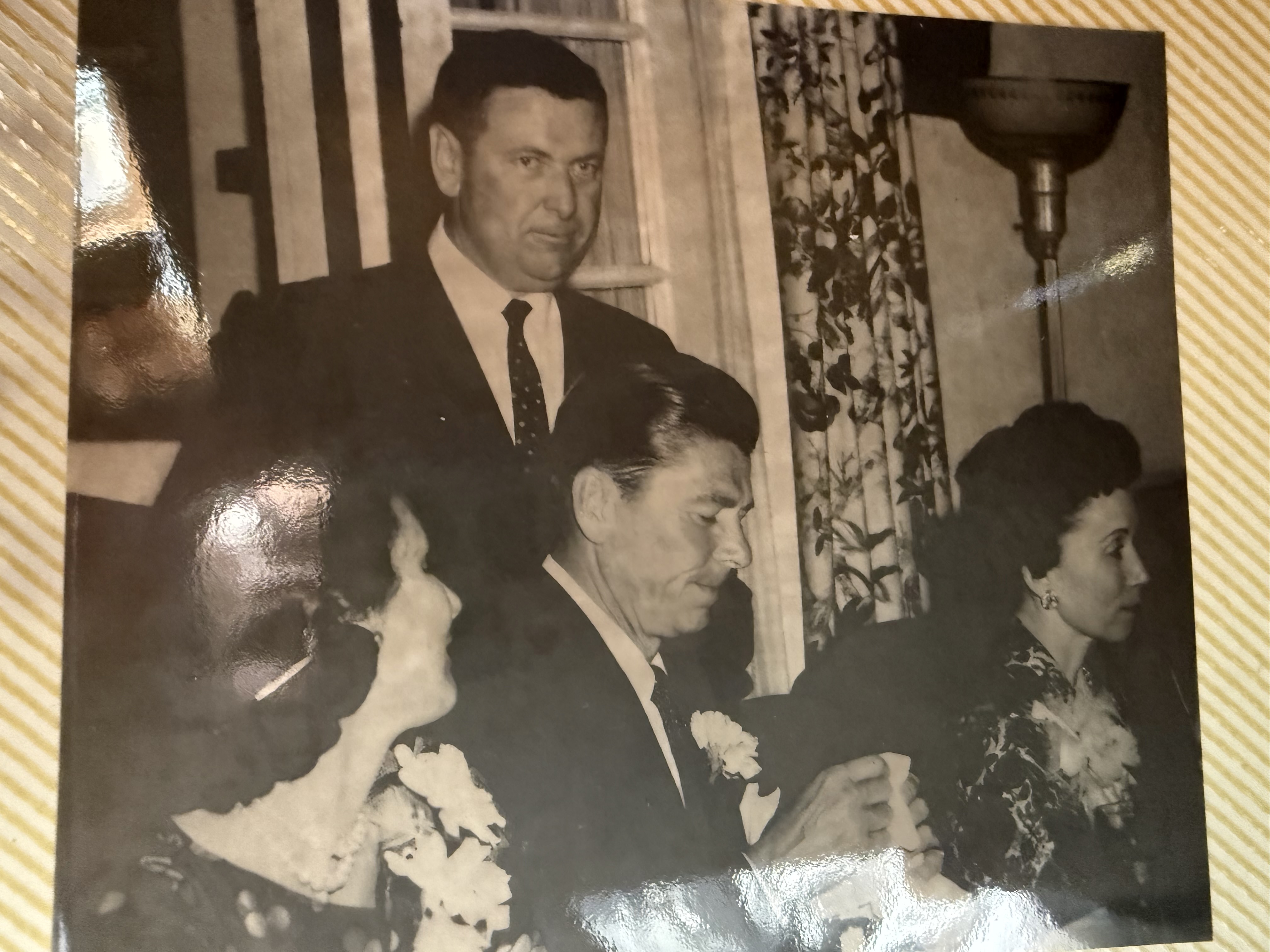
In 1974 Henry Rosso started The Fund Raising School in San Francisco. It was a training business for people whose job is to ask for money. From 1977 to 1987 Robert L. Payton ran the Exxon Education Foundation, the giving arm of an oil company. He used it to pay for the academic study of philanthropy (Encyclopedia of Indianapolis). I know this world well. My grandfather, Joseph McAleavey, was chairman of the GE Elfun Society from 1957 to 1958. GE started Elfun in 1928 for its top managers, and in the 1950s it began turning into the company's community service organization (Schenectady History). In 1986 Lilly Endowment paid for a planning study. In 1987 it gave Indiana University $4 million to open the Center on Philanthropy at IUPUI (IU News). The Fund Raising School moved into the new Center that same year. Payton became its first full-time director in 1988 (UA018).
At first, Lilly Endowment paid for all of it. By 2007 the Endowment had given the Center about $84 million (NonProfit Times). Payton gave the new field its definition, voluntary action for the public good. The Center's best-known research product became Giving USA, a yearly count of how much Americans give and where it goes (Encyclopedia of Indianapolis). In 2012 Indiana University turned the Center into a school. In 2013 it named the school for the Lilly family. IU calls it the first school in the world devoted only to philanthropy (school founding page).
IU's claim is true as far as it goes. No school before it was devoted only to philanthropy. It is also the second time Americans built schools with "philanthropy" in the name. The first ones trained social workers.
In 1904 the subject was the tenement, the sick worker, and the child in the mill. The student was the person who would visit them and then fight for a law. In 2013 the school's best-known product was a yearly count of donations, and the training center inside it taught people to raise money. The student was the person who would raise the money, manage it, or give it away. The word "philanthropy" was on the door both times. The first schools centered the family in need. The new school centers the family with money.
Ivan Illich wrote in the 1970s about professions that claim the power to say what people need, and who is qualified to meet that need (Illich, Disabling Professions, 1977). Philanthropy fits his description. In 1904 "philanthropy" was the name for training social workers. Today Indiana University uses it as the name for studying funders and fundraisers. A funder paid to build the school that teaches it.
Part IIII Grew Up Inside This Change
My family lived this story on one campus. My father went to the Indiana University School of Medicine in Indianapolis and graduated in 1974. That is the same medical school where Indiana's social work education began in 1911. My mother worked at the medical center. That is where my parents met. I was born there in 1977. Literally, I was born on campus.

I went to college at IUPUI while the university was building new fields from scratch. IU was building new media and informatics in one part of campus. It was building philanthropic studies in another. In 1998 I was Speaker of the House of Organizations in the Undergraduate Student Assembly. That is where the student organizations of the campus came together, including groups from the new media and philanthropy programs. On November 13, 1998, IUPUI unveiled its new mascot. That day I pulled back the cover on the new Jaguar at center court, during a daytime men's basketball game against West Virginia State (IU News). I founded a chapter of Phi Alpha Delta, the pre-law fraternity. Its members came from schools all across the campus. Pat and Rachel McGeever became my mentors. I earned my bachelor's degree in philosophy from the IUPUI School of Liberal Arts. My philosophy courses and the new philanthropy courses were listed in the same School of Liberal Arts bulletin. I earned my master's degree in social work from Indiana University.

I went on to a career in social work, social change, and national service. Harris Wofford, the former senator who helped President Kennedy create the Peace Corps, was a colleague and mentor. His son Dan is a friend and colleague. I helped bring the National Service Archives to the University Library at IUPUI. At the opening on September 27, 2019, Stephen Goldsmith swore in twenty new AmeriCorps members of Public Allies Indianapolis, an organization I founded in 2009 (IU News).

I gave the commencement address to the last graduating class of the IUPUI School of Liberal Arts. The next year I gave it to the first graduating class of the IU Indianapolis School of Liberal Arts.

I have taught as an adjunct in the School of Social Work off and on for over 15 years.
Part IVA History of the field and look into course catalogues
I went back through twenty years of Indiana University course catalogs for the Indianapolis campus. IU calls them bulletins. A bulletin lists every course a school offers, with a short description of each one. I read the bulletins for 2004, 2006, and 2008, and every year from 2018 to 2027. The bulletins from 2010 to 2017 are no longer online (Indiana University Bulletins). I counted a course when its title or description used the words in question. A bulletin shows what a school lists. It does not show how often a course is taught or how many students take it.

In 2004, IU's bulletin listed 13 courses in philanthropic studies. None of their titles named fundraising, donors, grants, gifts, or campaigns. Today the Lilly Family School of Philanthropy lists 54 courses. Seven of their titles name fundraising, donors, grants, gifts, campaigns, or stewardship.
Philanthropy took up ethics too. In 2004, no philanthropy course mentioned ethics, morals, or virtue. Today eleven do. Courses that mention civility or character went from one to six.

Labor Studies went the other way. Labor Studies is part of the School of Social Work. It teaches about unions, workers, and power on the job. Last year its bulletin listed 60 courses. This year it lists 23. Courses that mention power, unions, workers, poverty, or justice fell from 49 to 19.
Social work grew for most of these years. It listed 73 courses in 2004 and 87 this year. Courses that mention power, oppression, poverty, or justice rose from 12 in 2004 to 36 last year. This year, under a new master's curriculum, there are 25.
Philosophy is still in the bulletin. It lists 75 courses this year. Twelve of their titles name ethics, morals, or virtue. Only four philanthropy titles do. The courses are still there. The degrees that bring students to them are suspended.
The school a foundation built has quadrupled. It now teaches fundraising, ethics, and civility. The labor program inside social work lost more than half its courses in one year. The philosophy degrees are suspended. Indiana University has answered the question of who gets to teach us what is good. It chose the school a foundation built.
The School of Social Work and the Center on Philanthropy are a short walk apart on this campus. In 2001 the social work school published its own ninety-year history. The Center does not appear in it (Busch et al. 2001). The university's inventory of the philanthropy school's papers lists course folders for twenty-one departments and dual-degree plans with eight fields. Social work is in neither list (UA018). Social work schools trained under the name "philanthropy" from 1898 to 1920. When Indiana University built a new school under that name, social work does not show up in the inventory of its papers.
Part VPhilanthropy Used to Mean Changing the Law
Most of us learned that philanthropy is what wealthy people do when they feel generous. We learned it from the people who ask for their money. We learned it from the schools that money built. In 1898, philanthropy meant something else. It meant training people to visit families in the tenements in the morning and to change the law at the statehouse in the afternoon. The records of the first schools in New York and Chicago still show it.
The first schools of philanthropy in America trained social workers. Social work should take philanthropy back.
Sources
- Columbia University School of Social Work Records, finding aid
- Columbia University Libraries, Online Exhibitions, "Tenement House Committee," Community Service Society Records
- Social Welfare History Project, VCU Libraries, "Edward T. Devine (1867-1948)"
- Ethan G. Sribnick, "Josephine Shaw Lowell and the Founding of the Charity Organization Society," Uncensored, Institute for Children, Poverty, and Homelessness, 2011
- Crown Family School of Social Work, "Our First Century"
- Chicago School of Civics and Philanthropy Records, University of Chicago Library
- Busch, Powers, Metzger, Behroozi, Siegel, and Cournoyer, "Indiana University School of Social Work: 90 Years of Professional Education," Advances in Social Work 2(2), 2001
- Encyclopedia of Indianapolis, Robert L. Payton
- Schenectady History, "The Old GE," Elfun Society
- IU News, "Indiana University's commitment to Indianapolis spans more than 100 years"
- Lilly Family School of Philanthropy Records, UA018, finding aid
- NonProfit Times, "Center On Philanthropy At 20," 2007
- Encyclopedia of Indianapolis, IU Lilly Family School of Philanthropy
- Lilly Family School of Philanthropy, Founding of the School
- Ivan Illich, Disabling Professions, 1977
- IU News, "Roaring back to '98: From Metros to Jaguars," April 5, 2018
- IU News, "National Service Archives to open at IUPUI," September 19, 2019
- IU Indianapolis University Library, National Service Archives page, with a photo of the 2019 Public Allies oath
- Indiana Commission for Higher Education, Voluntary Early Actions Before HEA 1001 Implementation, June 30, 2025
- Indiana Commission for Higher Education, Final Recommendations, 2025-2026 Under-Threshold Review, April 1, 2026
- Inside Indiana Business, "IUPUI to Offer New Philanthropy Doctorate," February 11, 2022
- Indiana University Bulletins, IUPUI and IU Indianapolis, 2004-2027
- Federalist Society, Alexandra O. Hudson bio
- Next Big Idea Club, The Soul of Civility