By Marc McAleavey
In Jericho, about two thousand years ago, there was a rich tax collector named Zacchaeus. He was a short man, and when Jesus came through town, he climbed a sycamore tree so he could see over the crowd. Everyone in Jericho knew how Zacchaeus had gotten rich, collecting taxes for Rome and keeping extra for himself. When Jesus stopped under the tree and invited himself over for dinner, the crowd grumbled that he was going to eat with a sinner. Jesus said nothing about what Zacchaeus had done. Before the meal was over, Zacchaeus stood up and said he would give half of everything he owned to the poor, and pay back four times over anyone he had cheated. Jesus answered, "Today salvation has come to this house."
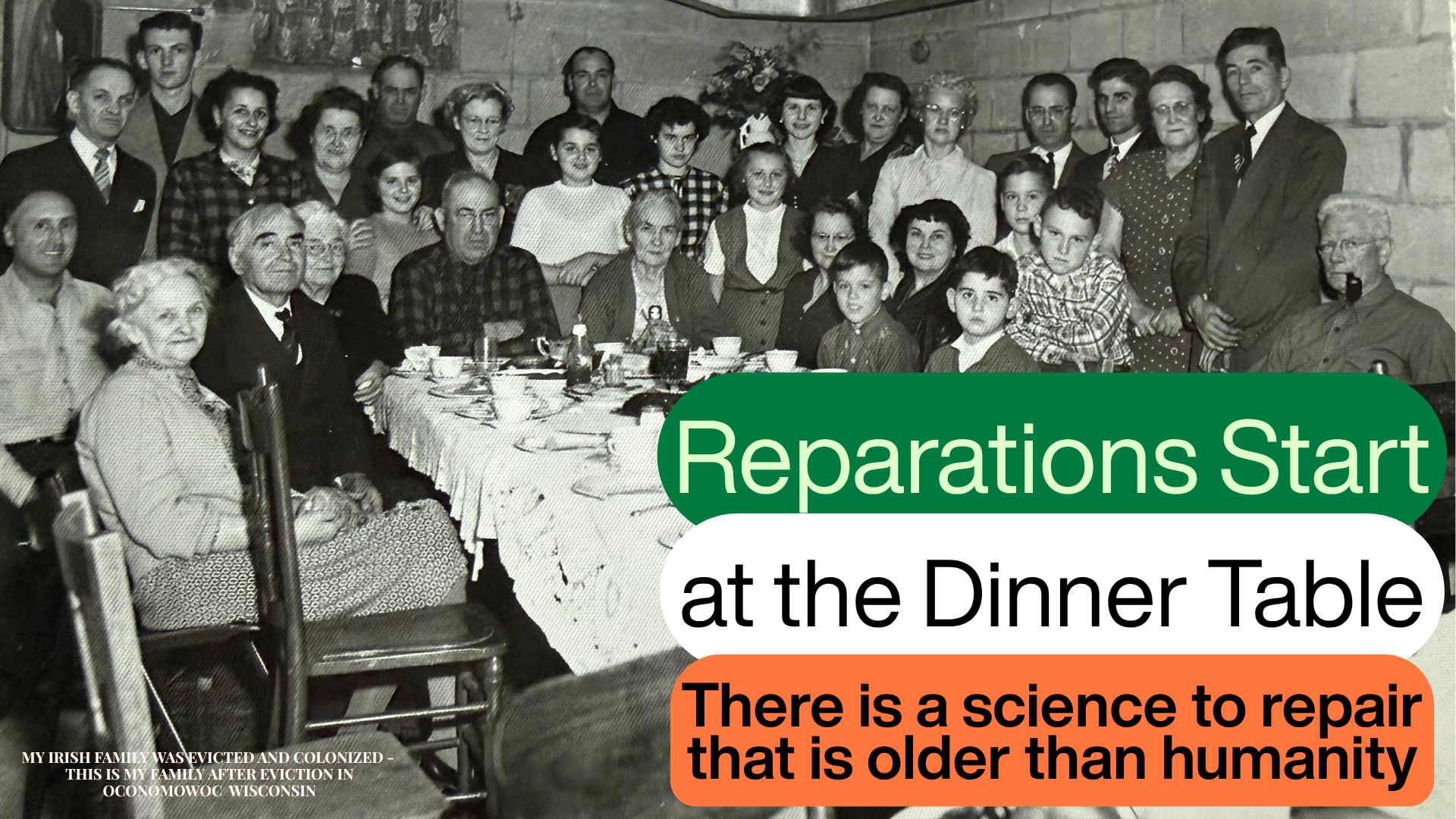
That story is the clearest picture of reparations I know. Zacchaeus was welcomed first, and then he was fully accountable, and his accountability took the form of repair, with money returned to the people it was taken from, plus interest. Nobody had to shame him into it. The dinner came before the payment.
Our national argument about reparations runs in the opposite direction. When Pew Research asked in 2021, about three in ten American adults said descendants of enslaved people should be repaid, including most Black adults and fewer than one in five white adults. The most common objection is personal and heartfelt. People say they never owned anyone, their family came over later, or their grandparents were poor too, so why should they feel guilty? That objection answers a question about guilt, and reparations are a question about debt.
The Bible saw this confusion coming, very early. In the garden of Eden, after Adam and Eve eat from the tree of the knowledge of good and evil, the first thing they notice is that they are naked, and the first thing they feel is shame. They cover themselves with fig leaves and hide among the trees. When God walks in the garden and calls out, "Where are you?", the man says he was afraid, so he hid. God asks questions. It is the man who hands down the first verdict, pointing at the woman, and the woman who hands down the second, pointing at the serpent. In the Bible, guilt is something human beings keep assigning to each other, and something God keeps taking back. In the Book of Job, God calls Job blameless, and his friends spend chapter after chapter insisting he must have done something to deserve his suffering. At the end, God tells the friends they were wrong.
Psychologists have spent decades studying the same pattern. June Tangney and her colleagues found that when people feel condemned as whole persons, they tend to hide, deny, and blame someone else. When people can look at what they did without being condemned for who they are, they are far more likely to apologize and make things right. That finding explains a lot about why the reparations debate keeps stalling. As long as reparations are argued as a verdict on white Americans, the argument produces exactly what shame produces, which is hiding, denial, and blame. The garden plays out again on cable news every night.
Americans already know how to repair without a verdict, because we have done it. In 1988, Ronald Reagan signed the Civil Liberties Act, which formally apologized to Japanese Americans who had been forced into camps during World War II and paid $20,000 to each living survivor. Most of the taxpayers who funded those checks had never guarded a camp or signed an order. They inherited a government that had done a wrong, and the government paid what it owed. A Republican president signed it, and the country was better for it.
Universities and churches have started doing the same. In 1838, Jesuit priests in Maryland sold 272 enslaved men, women, and children to plantations in Louisiana to keep Georgetown afloat. In 2021, the Jesuits of the United States pledged $100 million toward a foundation for the descendants of those families, with a goal of raising $1 billion. None of the priests making that pledge had met anyone who was sold. They inherited the order, its schools, its buildings, and its debts all together, the way every family inherits a house along with whatever is still owed on it.
That is how inheritance works everywhere else in American life. A person who buys a company buys its liabilities. A city that issues a bond keeps paying it after the mayor who signed it is gone. A country that grew rich on stolen labor, and then spent another century keeping Black families out of good neighborhoods, good jobs, and good loans, carries that account forward too. Naming the debt passes no judgment on anyone's soul. It is bookkeeping, done honestly.
The first chapter of Genesis has one more detail that matters here. Each of the six days of creation ends with the same line, "And there was evening, and there was morning." On the sixth day God makes human beings and calls everything very good. The seventh day is different. God rests, blesses the day, and makes it holy, and the line about evening and morning never comes. The seventh day is left open. Paul, writing to the Romans, says the whole creation is groaning like a woman in labor, waiting for the children of God to show up as who they really are.
I have come to believe we are stuck on the sixth day. We were made very good, and we have spent most of our history hiding from that goodness and handing out verdicts on each other, building towers of achievement so no one can say we do not count. Our ancestors kept the seventh day every Saturday and every Sunday so their children would know what to look for, a day of rest, of shared tables, of strangers welcomed in. That day is still waiting on us.
Reparations are a divine and natural process. Repair is what living things do when they are wounded, and it is what Zacchaeus did over dinner with his books open. To repair is to make heaven good on earth and begin the seventh day. A country can start the same way he did, by sitting down together first, and then paying back what is owed.