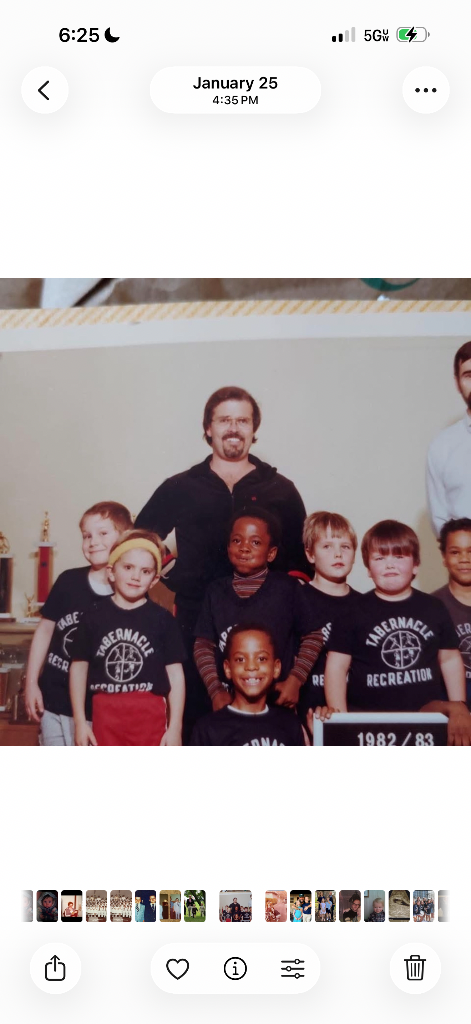
There is an arithmetic a fat kid learns before he learns long division, and it is done entirely in the lunchroom. You calculate the distance from the tray line to the nearest safe seat. You calculate how long you can stand holding a tray before standing itself becomes a spectacle. You calculate which table will not tighten when you approach, the way a body tightens against a needle. You are seven, maybe eight. Already you are running numbers no one taught you, and the sum is always, somehow, yourself.
I got good at the math. To be good at it, I had to believe there was a problem to solve, and I understood early that the problem was me. The fact of me. The volume I displaced. The way I entered a room like weather. I learned to read a cafeteria the way a sailor reads a sky. People call this a gift. It is a tax, and I paid it in a currency I did not know I was spending, which was the ordinary, unremarkable confidence of walking somewhere and simply arriving.
Let me show you the room instead of explaining it.
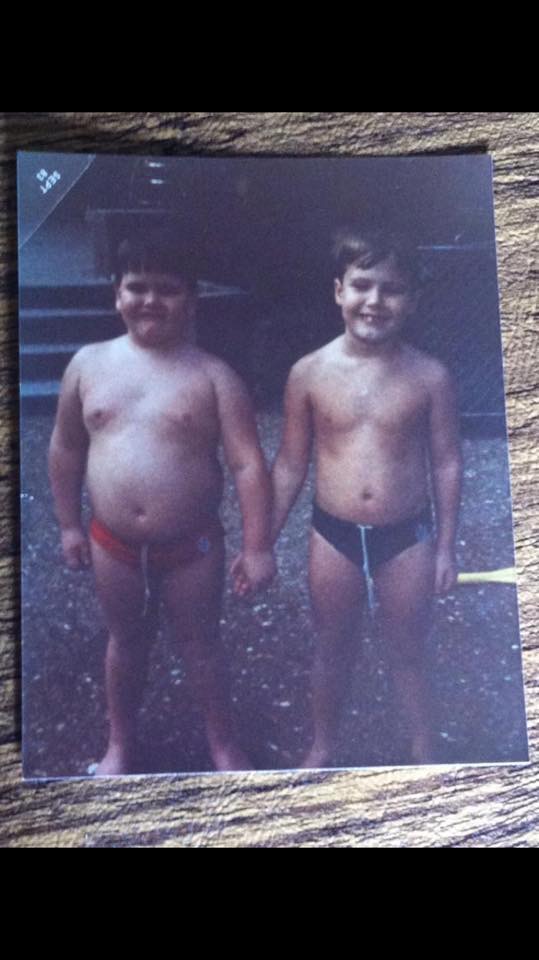
Fourth grade. The cafeteria smelled of institutional cheese and the pink soap from the bathroom dispensers, which someone was always squirting into someone else's milk. I had a system. I ate fast. Hunger had nothing to do with it, though I was frequently, boringly hungry. A full tray was a reason to be seen. An empty tray was permission to leave. The trick was to become finished. If you were finished, you could stand and bus your tray and walk out into the hall with the posture of a person who had somewhere to be, and no one could say you had been abandoned, because you had left first. I left first for about six years. It is a strange thing to have engineered your own solitude so that it cannot be inflicted on you. It is a strange thing to be nine and already union-organizing your own loneliness so it cannot be used against you.
Recess was harder, because recess had no tray to hide behind. Recess was open field and chosen sides, and the choosing was public, and I was the arithmetic everyone else could do too. No one picked me last with any drama. Drama would have required that I matter enough to mock. They picked me the flat, administrative way you assign a locker. Fine. Him. Whatever. And so I did what the imaginative and the unpicked have always done. I left the field without leaving it. I went inside.
Inside was better. Inside I was building things: cities with drainage systems, a spy network with a dress code, a baseball league of invented players whose statistics I tracked across seasons that existed nowhere but behind my eyes. I narrated my own recess. I gave the pigeons backstories. I noticed, because noticing was the one game I could win alone, that the fourth-grade teacher touched her wedding ring when she was about to lie to us gently, that the custodian sang only when he thought the hall was empty, that there was a particular quality of April light that made even the chain-link fence look like it was trying. I did not know I was doing anything. I thought I was hiding. Hiding and paying attention are, from the outside, indistinguishable. The difference is only whether anyone ever comes looking.
The jokes came next, and the jokes were the real invention, because the jokes let me be seen on my own terms for the first time. Here is the thing nobody tells you about a fat kid who is funny. The humor is a contract he signs young. Somewhere around ten I understood that if I said the thing about myself first, quicker and sharper and funnier than they could, I got to keep something. I got to keep the timing. They could have the target. I would keep the trigger. I made them laugh with me by handing them a version of me to laugh at, pre-approved, focus-grouped, safe. It worked so well it scared me. I became, for a while, genuinely beloved in the specific way a class clown is beloved, which is to say I was necessary and disposable at once, a utility, the kid you wanted at the party who was never, actually, invited to the smaller thing after the party, the sleepover, the thing where you found out who your friends were once the audience went home.
I found out about one of those the following Monday. A boy I will call Kevin, though that was not the arithmetic of his real name, described the sleepover in the detail children use when they are not being cruel, only oblivious, which is worse. Who was there. What movie. The trampoline. I laughed in all the right places. I did a bit about the trampoline I had not been on. I was so good by then that no one could see the leaving-first happening on the inside, the tray being bused, the hall being walked. I probably cried later. What I remember more clearly is the machinery, the way I took the hurt and immediately, reflexively, converted it into material. Even the grief had to earn its keep. Even the loneliness had to be funny or it was not allowed to exist.
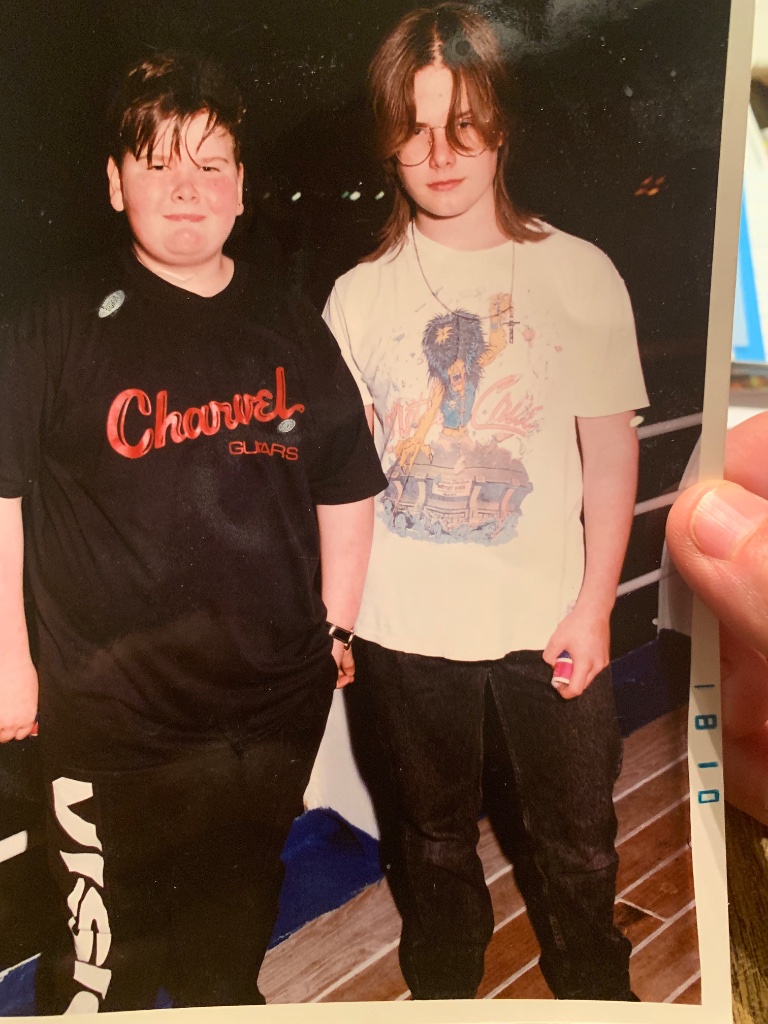
This is the part I need you to feel, and it took me thirty years to say it without flinching. It was exhausting. Sadness is a weather that passes. This was a climate. The work of trying to become acceptable is a full-time job performed by a child who is also supposed to be learning cursive. I dieted at eleven. I remember the specific hope of it, the almost religious conviction that on the far side of some number on a scale there was a different boy waiting, a boy who arrived at tables instead of calculating them. I would get the number and the boy would not be there. There was only me, thinner for a season, still running the math, having learned nothing except that the horizon recedes. I tried on personalities the way other kids tried on jackets. Athletic did not fit. Tough was a joke I could not sell. Smart was available but came with its own tax bracket. I settled on funny-and-watchful, funny-and-watchful became my whole face, and I wore it so long I forgot it was a mask and started calling it my personality. I mistook hypervigilance for who I was. I confused surviving with being someone.
Here is where the honest version of this essay has to slow down and refuse the easy road, because the easy road is right there, paved and lit. The easy road says: and then he grew up and all of it became strengths, and the fat kid got the last laugh. That road is a lie, at least in the shape it usually takes, and I have driven past enough of those billboards, the ones that read Your Struggle Was Secretly a Superpower, to know they are selling something.
So let me tell it the true way, which is slower and has no billboard.
Nothing became anything on a schedule. There was no morning I woke up and found my wounds quietly reprocessed overnight into gifts, the way a factory turns scrap into product. What happened is duller and stranger. The machinery I had built to survive the cafeteria kept running after the cafeteria was gone, because machinery does not know when the war is over, and it turned out to be good for other things.
I could read a room in a conference now. People paid me for it. They called it emotional intelligence. I did not tell them it was the same skill I had used to find a seat. The noticing, the ring-touch and the custodian's singing and the April light on the fence, turned out to be the entire substance of the thing adults call insight. I could see the pattern under the thing before the thing had finished happening, because I had spent a decade watching for the shift in a face that meant I should leave first, and a face is a face is a face, in a lunchroom or a boardroom or a hospital waiting room where my father was dying and I was the one who noticed the doctor's ring-touch and knew, before she said it, what she was about to gently lie about.
The empathy asks for more care, because empathy is the word we reach for when we want to make suffering pay a dividend, and I do not want to do that. Still, the boy who spent recess giving pigeons backstories became a man who could not walk past a person without wondering what their arithmetic was. What are you calculating, I would think, watching a stranger hover at the edge of a party. Where is your safe seat. I knew the hover. I had invented the hover. The refusal to walk past, more than the systems thinking or the pattern recognition or any of the résumé words, is the one I would keep if I could keep only one. The capacity to see the person everyone else's eyes slid off of. I have it because for a long time I was that person, and you do not forget the face of the thing that was once your own.
Listen. No one gave me these things in exchange. That is the billboard talking. There is no cosmic ledger where childhood pain is deposited and adult capacity is withdrawn at a favorable rate. Something more ordinary and more radical is true. I survived. The tools I used to survive were real tools, and tools do not know the difference between the war they were forged for and the peace they get used in later. The same knife guts the fish and carves the toy. I made it with the hands I had, in the room I was in.
For most of my life I asked one question, and I asked it in the specific tireless way you can only ask a question you are certain has an answer that indicts you. What is wrong with me. I asked it at the tray line and I asked it at eleven on the scale and I asked it at thirty in a parking lot for reasons I could not name. What is wrong with me. The question assumes its own conclusion. It is a verdict wearing the costume of an inquiry, and I wore it for decades, because a verdict, however cruel, is at least a resolution, and a child will take a cruel resolution over an open wound every time.
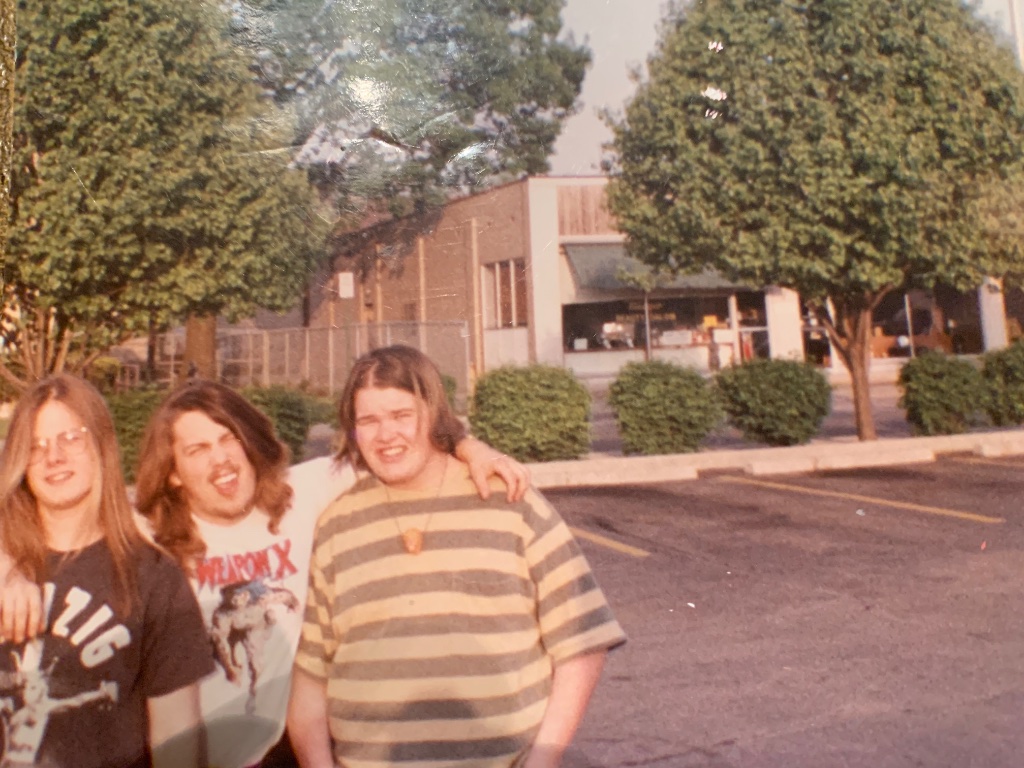
The turn, when it came, arrived as a different question. I did not choose it so much as trip over it, the way you find the light switch in a dark room with your shin. I was, of all the unglamorous things, looking at a photograph of myself at nine, round-faced and watchful and mid-joke, working the room even for the camera. Instead of the old flinch, the old what is wrong with him, something in me went quiet and asked, almost tenderly, as if about someone else's child:
What if he survived exactly the way he needed to survive?
That sentence is quiet. It felt like being forgiven for a crime I had not committed but had been serving time for anyway. What if the leaving-first was engineering. What if the jokes were a negotiation conducted by a small person with almost no leverage, who nonetheless walked away with the timing. What if the watching was the beginning of the only kind of love I would ever be any good at, the love that pays attention, the love that notices, the love that will not let the overlooked person go unremarked. What if none of it was pathology. What if all of it was a nine-year-old doing, with breathtaking resourcefulness, the one holy thing a body is built to do, which is to stay alive and stay tender at the same time, against a room that had made those two things feel like a choice.
The question changed everything by changing nothing. The facts stayed the same. The cafeteria still happened. Kevin's trampoline still happened, and I still was not on it. The story those facts belonged to stopped being a case against me. It became a record of a survival so ordinary and so improbable that I could finally look at it without needing it to mean I was broken.
Now I want to widen this out, carefully, because I have been talking about one boy and this is not about one boy.
I have to say something about the ones who made the room the room, and I have to say it precisely, because the temptation is to hand you monsters and let you hate them on my behalf, and I will not do that, partly because it is untrue and partly because it would let them keep the pen. Kevin was nine years old. Monsters are a convenience I will not grant him. The boys who tightened the table were children running their own arithmetic, on a different but adjacent equation, terrified in their own idiom of being the one everyone left first. Cruelty in children is usually just fear with an audience. Forces enormous and invisible to them had shaped them. Fathers who taught them what a man's body was allowed to be. A culture that had already decided which shapes were fully human. The same machinery of shame that was grinding me, except they had been assigned the other end of it. I do not forgive them, exactly, because forgiveness is a transaction and no one has come to make the trade, and I have learned to distrust essays that resolve into forgiveness on cue, like a sitcom hug before the credits. I do something more stubborn than forgiveness. I refuse to let them write the last chapter. Call it eviction. They were tenants in my story for a very long time. I have changed the locks. They can keep their childhoods. I am keeping mine.
Here is what I have come to believe, standing on the far side of the question that finally set me down. The world is full of people carrying an invisible version of that cafeteria. The fat kid is only the shape mine took. Yours might be the kid who was too much or too little, too loud or too strange, too dark or too poor or too tender, the kid who learned that some fundamental fact of himself was a problem to be managed, and who built, out of whatever he had, a machine to survive it, and who is now sitting across from you in a meeting or a marriage or a checkout line, running numbers you cannot see, still leaving first so no one can leave him, still converting every hurt into material because the loneliness is not allowed to simply exist. They are everywhere. They are most people, I have come to think. The great secret democracy of the wounded is that almost everyone got a version of the room, and almost everyone is still, in some cellar of themselves, a child asking what is wrong with me, and almost no one has been handed the other question, the one that goes what if you survived exactly the way you needed to survive.
I cannot fix that for them. I have given up the fantasy of fixing. I can do the one thing the watching taught me, the thing the pigeons and the ring-touch and the April light prepared me for without my consent. I can notice them. I can see the hover and know the hover. I can be, for one other person at one lunch table, the seat that does not tighten. Heroism has nothing to do with it. I am a formerly frightened person who found a use for his fear. This is the whole of what repair actually is, stripped of its billboards. It is the thing that was done to you in the dark, done differently, on purpose, by you, in the light, for someone else.
I still eat fast sometimes. The machinery still runs. It does not know the war is over, and maybe some part of me keeps it oiled on purpose, the way you keep a lighthouse lit long after the rocks are charted. The reason has changed. I eat fast now because I am delighted, because I am talking with my hands, because there is somewhere I actually want to be and it is exactly this table, this one, with these people. I arrived at it. I want you to hear that word. I arrived at it, without doing the math, and I sat down, and no one tightened, and if they had, I would have stayed.
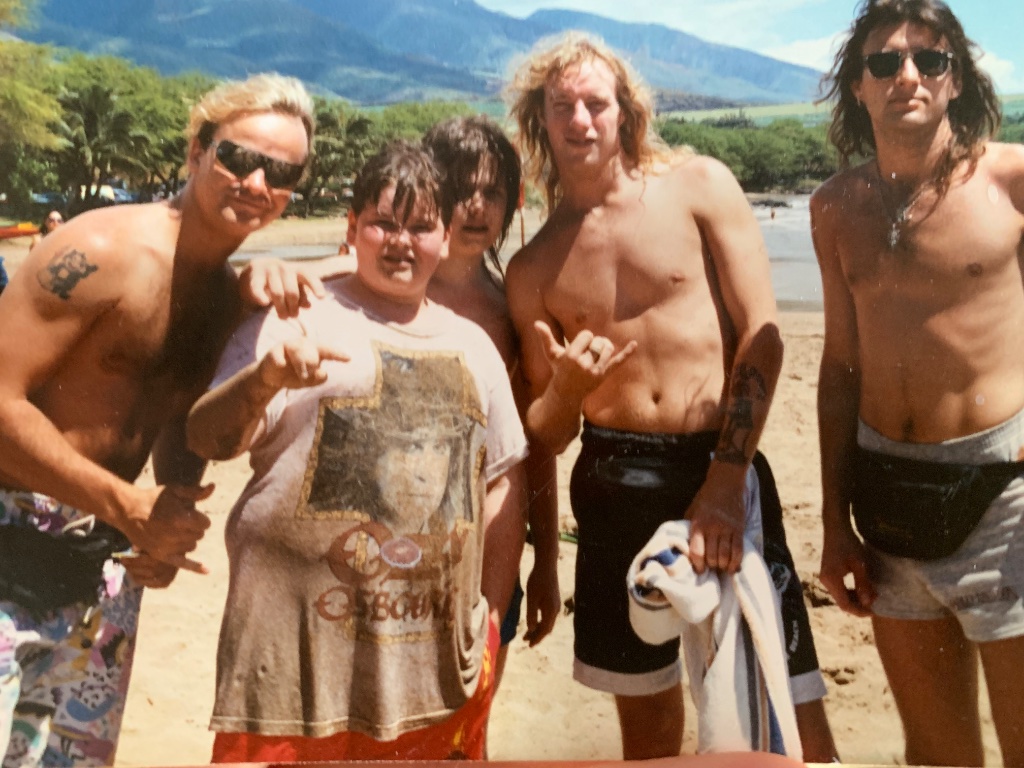
The boy in the photograph did all of this. Round-faced and watchful and working the room, he built the man who could finally look back and love him. He did not know that was what he was doing. He thought he was hiding. He was keeping something alive in there, an ember of pure, undefended attention, a refusal to stop loving a world that had not yet decided to love him back. He carried it through the whole long cafeteria of a childhood without letting it go out, and he handed it forward to me still burning.
Joy, as it turns out, is the revenge of the fat kid.
Not because joy bites back, but because joy refuses to surrender its capacity to love.
— Marc McAleavey, MSW