The Empathy Sector
When I tried to build a sector out of empathy, they thought it was evil. They canceled me.
When I tried to build a sector out of empathy, they all started to notice me. But it wasn't really me they were noticing. It was their youth crashing in on the scene.
They saw themselves in my shine not realizing it was theirs the whole time.
When I tried to build a sector out of empathy, I was sitting in Gary. In a schoolhouse shut down because of the "scary".
The leaders were there to care for the youth. Our governor is in a helicopter, he can't see the truth.
When I tried to build a sector out of empathy, my son and I stopped off in Gary. On the way to see J. Cole one last time in a center of united humanity. After they stopped me from building a sector out of empathy.
The storm had blown the white hood off. The grand wizard was staring down at me.
We developed the Empathy Sector initiative well before this month's storm. Well before Elon tried to criminalize empathy. The last two lines will be read as an accusation against a person and they are not. Indiana does not need a hood to be found. In the 1920s this state's Klan enrolled a quarter or more of its white male population, seated a governor, and ran the statehouse through a man who eventually went to prison for murder, and the machinery of that era did not vanish so much as it took off the costume and kept the offices. A hood is a garment. What the storm exposed is not clothing. It is the arrangement of a state that decides, without anyone saying so out loud, which of its cities will be waited on and which will do the waiting.
Two weeks ago, storms tore across northwest Indiana with straight line winds and tornadoes and flooding, and the electric grid failed at a scale the utility calls the worst in its history, with about sixty percent of its customers dark at the peak. Gary reported more outages than any other community. As I write, Gary and Portage sit at the very end of the published restoration schedule, majority restoration promised by the last date on the page. There is a federal emergency declaration, a National Guard mobilization, more than a thousand mutual aid workers, a state relief fund, and a small city of crews housed at a shopping mall. The response is real and the workers are working around the clock.
And still Gary is last. That is the sentence people are sitting with in the dark.
What actually happened, and what did not
There is a version of this story circulating that is false. I have spent the last year writing about what happens when we let inference do the work of evidence. The false version says that after a NIPSCO vehicle was struck by gunfire in Gary, the utility punished the city by suspending restoration and sending Gary to the back of the line for a month. That claim spread as a graphic designed to look official. The City of Gary itself flagged it as a scam. It was not true.
Here is the verified truth. A NIPSCO vehicle carrying two workers, with an off duty officer following, was hit twice by gunfire around half past midnight on Rutledge Street, one round lodging in a headrest, nobody injured, nobody seeing the shooter, the investigation still open on whether the crew was targeted at all. Restoration work in Gary paused. It resumed the next afternoon once Gary police, Indiana State Police, and the National Guard arranged protection, a matter of hours and not weeks. The mayor said plainly that work had not stopped, called it an isolated incident, refused to let one act define his city, and asked residents to rally behind the crews. That is the truth, and I would rather lose an argument than win one on a lie.
But notice what this lie sits on. It required a city where being served last was already believable. Nobody had to invent the plot, because the premise was already installed by a century of practice, and the counterfeit banner simply harvested a distrust that other people planted and never repaired. Disinformation is not a seed. It is a crop. It grows in soil that has been prepared for it, and the preparation of that soil in Gary has been a long civic project involving redlining maps, disinvested schools, a departed steel economy, decades of rate fights, and the reliable experience of being explained to rather than talked with.
So the true story is worse than the false one, and it is worse in a way that no one can be arrested for. Nobody had to decide to put Gary last. The decision was made across seventy years by people who are mostly dead now, in the routing of highways and the grading of neighborhoods and the deferral of maintenance in places whose complaints could be safely filed. The grid in the ground is old everywhere, and it is oldest and thinnest and most neglected exactly where the money left, and when a historic storm arrives it breaks hardest there and takes longest to fix. Restoration latency is disinvestment made visible. The dark is just the ledger, read out loud.
The grid nobody is rebuilding
Here is what I actually see when I look at northwest Indiana this month. I see two grids that both failed, and only one repair crew.
The first grid carries electricity. It is being rebuilt by more than a thousand people who came from other states to do it, who are working sixteen-hour days in flooded substations, and who deserve every bit of the safety their employer is now buying them with troopers and Guardsmen.
The second grid carries trust. It is the network of relationships that exists, or does not, between a utility and a city before a storm, between a lineworker and the resident watching from a porch, between a governor and a place he flies over, between an institution and the people it says it serves. That grid also went down in northwest Indiana, and it went down years ago, and the storm did not break it so much as switch on the light that shows it broken. You can see its failure precisely in what happened on Rutledge Street. Two workers and a neighborhood, strangers to each other, in the dark, and a gunshot, and fear that was completely reasonable on both sides, and then a lie that outran the truth for days because there was no relational wiring for the truth to travel on.
Nobody is rebuilding that grid. There is no mutual aid convoy for it, no emergency declaration, no line item. And in Indiana that is not an oversight, it is a decision, because we had a plan for it and we killed the plan.

What we cut
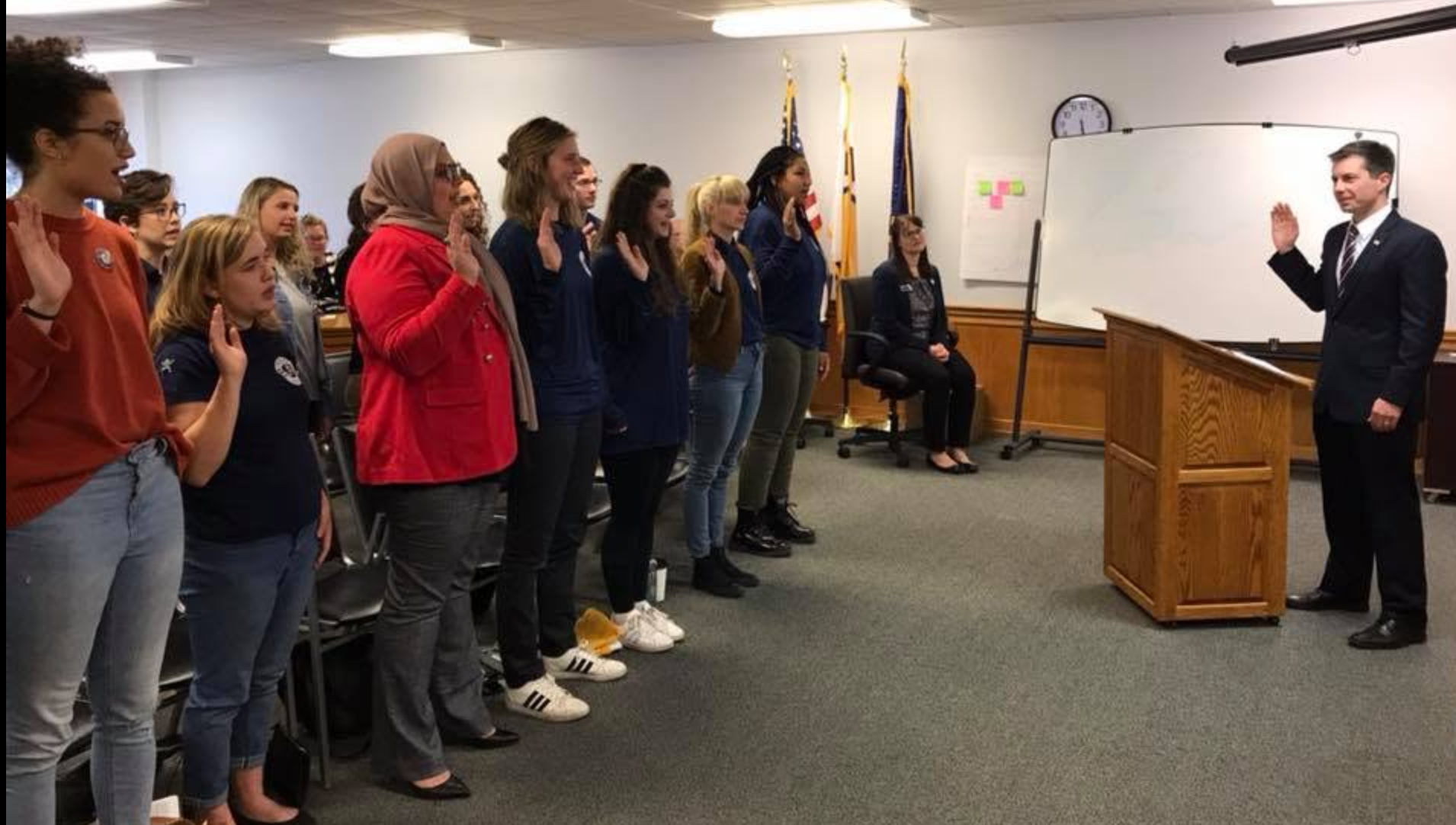
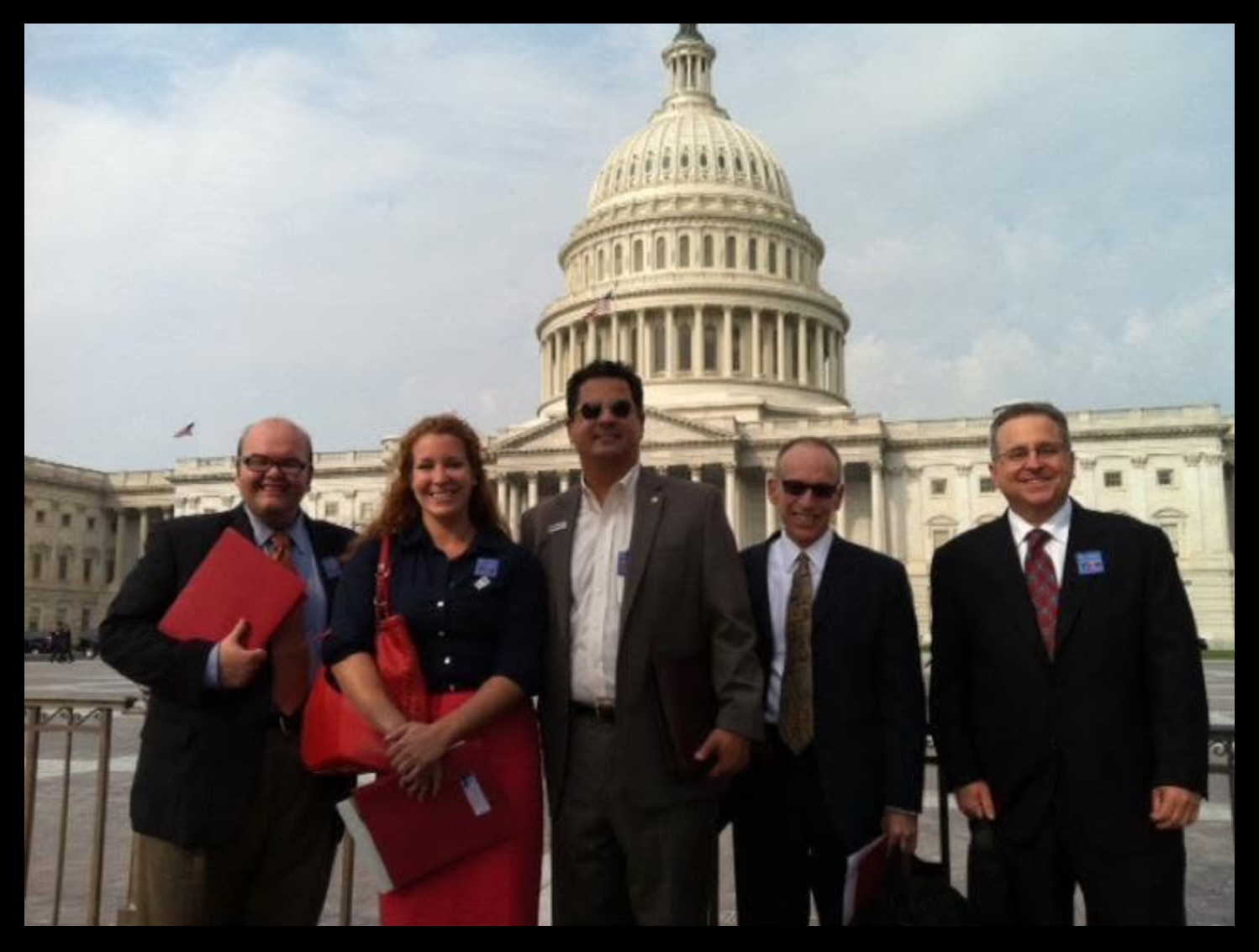
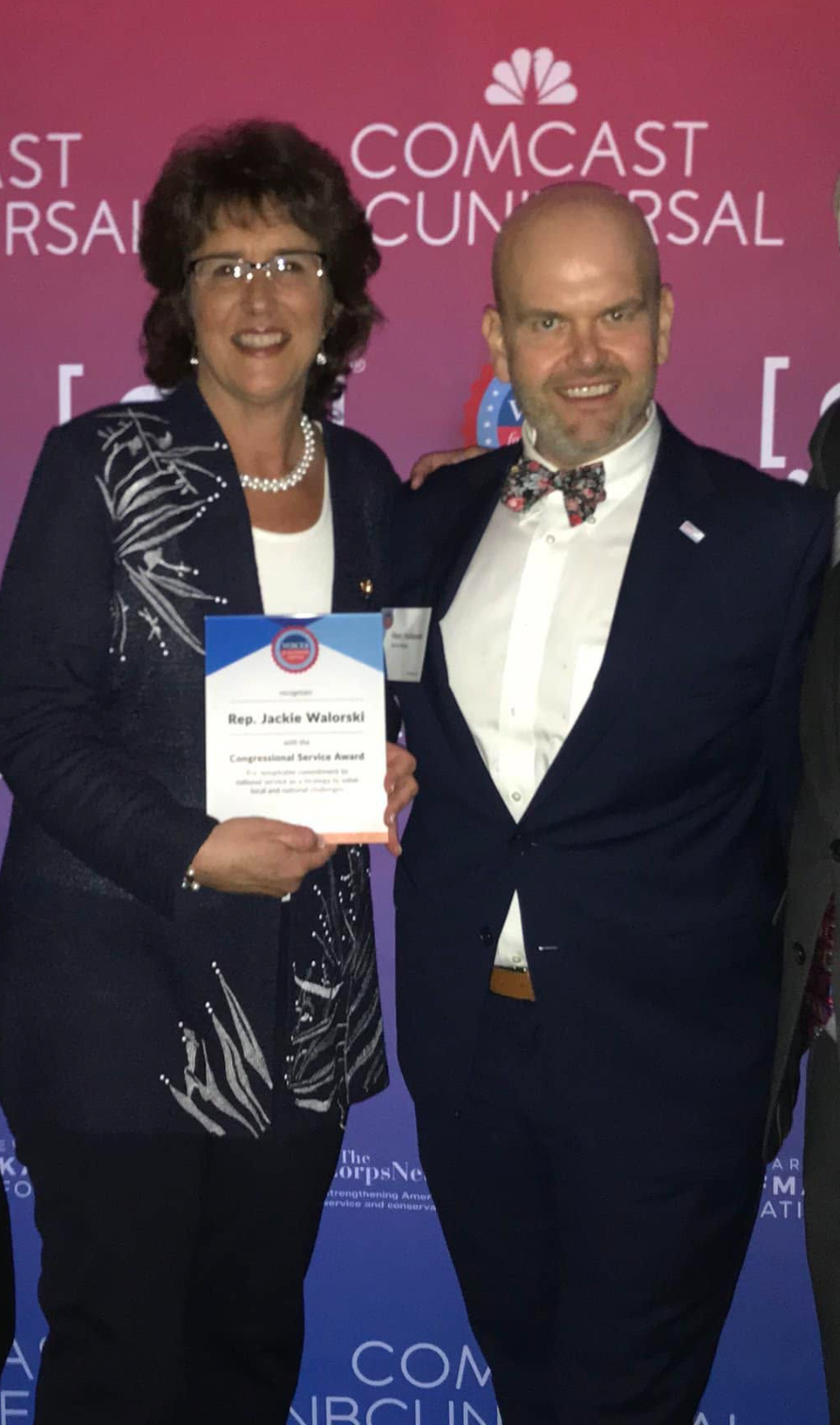
Eight years ago I wrote a framework called the Empathy Sector for Serve Indiana, the state's commission on volunteerism and service. Its premise was that when people serve one another, something is produced besides the tutoring or the meal, and that the something is empathy, and that empathy behaves like infrastructure rather than sentiment. It can be built deliberately, measured with a baseline and a post-assessment, assigned to someone accountable inside an institution, and grown across companies, congregations, nonprofits, and neighborhoods until a state has a fabric of people who know each other before the crisis rather than meeting for the first time inside it. I wrote that the benefits would include diffusing longstanding tensions between communities across cultural, ethnic, and economic difference. I tried to launch it before I left. The state cut it instead.
I am telling you this once, as a matter of record, and then I am done telling it. I do not want to do what I rally against. The temptation is to make Gary's dark week into evidence for 'my program', to convert a city's suffering into a credential for my judgment, and to end this essay being right. That would fail the first test I hold every institution to, which is whether the people in the story are its authors or its material. Gary is not my proof. Gary is a city of seventy thousand people with its own leaders, its own churches, its own mutual aid, and its own account of this month that is more accurate than mine will ever be. I told you so is not a call to action. It is a way of standing still while looking productive.
What is worth saying is not that I was right. It is that the capacity was never the state's to cancel. A commission can defund a framework. It cannot defund the practice, because the practice belongs to whoever will do it, and the plan is four pages long and sitting in a drawer that anyone can open.
The smallest thing that matters most
So I am releasing it. The Empathy Sector goes into the commons on this site, free, unbranded, no permission required and no credit necessary, and I hope somebody builds it better than I would have. But a framework is not a call to action either, so let me be concrete about what this week asks of us at three different distances.
Right now, serve. Not metaphorically. Gary residents can access the state relief fund through 2-1-1 for immediate housing repairs, schools have been closed and families are scattered, congregations and the YWCA are running the actual response, and the people best positioned to say what is needed are in Gary saying it. Follow their lead and send what they ask for, which is the only form of help that passes the test.
This year, build the second grid where you are. Every institution in this state now knows the price of being strangers to the people it serves, and utilities know it most sharply of all, because NIPSCO just learned in the hardest possible way that a company can have flawless logistics and still lose a city's belief in a single night. The work is unglamorous and it is done before the storm. It looks like a company whose crews have met the block before they have to work on it. It looks like a congregation that knows the names on the next street. It looks like a chief service officer inside an organization whose job is the relational readiness of that organization, which was the whole idea, and which costs almost nothing compared to what it saves.
And structurally, ask the one question that would change the next storm. Indiana will conduct an after action review of this event, and that review will measure the first grid in the units it always uses, customers restored and hours elapsed and dollars spent. Demand that it measure the second grid too. How fast did accurate information travel, and how fast did the counterfeit version travel, and which one won. Which communities believed their utility and which did not, and what did that belief track. Where did relationships exist before the wind, and did restoration go faster there. That is a measurable thing, and a state that measured it would learn in one season what it has refused to learn in fifty years.
I keep thinking about that schoolhouse in Gary, closed because the place had been declared too scary to keep open, with the leaders inside it anyway, caring for the youth that a helicopter could not see. The helicopter is the whole problem, and it is not really about any one man in it. It is about a way of governing that flies over, assesses, allocates, and departs, and never once lands long enough to be known by the people below. Empathy is the practice of landing. We cut the program that taught it, and two weeks ago the wind came through and showed us the shape of a state that never learned.
The lights will come back on in Gary. They always do, eventually, and the crews doing it deserve our thanks and our protection. But when the last house is reconnected, one grid will be repaired and the other will be exactly as broken as it was on the tenth of August, and it will stay broken until somebody decides that trust is infrastructure and builds it on purpose. That is not a state contract. That is Tuesday, and a street, and the names of the people on it.
GA
The Empathy Sector framework is available in full at joy4repair.com, free to adapt, no attribution required. Sources for this piece: NIPSCO restoration updates and published community schedules, August 2026; City of Gary scam alert regarding falsified restoration graphics; NBC Chicago, CBS Chicago, ABC7, Times of Northwest Indiana, and Cardinal News reporting on the August 14 shots fired incident and the resumption of restoration work; FEMA emergency declaration for Indiana, August 15, 2026; Indiana State Disaster Relief Fund via 2-1-1. Historical background on Indiana's 1920s Klan is drawn from the standard published histories of the D. C. Stephenson era.